
By Maureen Farrar
You sneeze. You laugh too hard at something. You jump during a workout. And suddenly, there it is — that little leak you’ve learned to plan around. Maybe you’ve started wearing a pad “just in case,” or you’ve quietly adjusted which exercises you’ll do in class. If any of this sounds familiar, you’re far from alone.
But here’s what too many women don’t know: leaking, urgency, pelvic pressure, and pain are common, but that doesn’t mean they’re something you just have to live with. The pelvic floor is one of the most important muscle groups in the body, and just like your glutes, your core, or your shoulders, it responds to training. The problem is, most of us were never taught how.
Whether you’ve had children or not, whether you’re in your 30s, your 50s, or beyond, pelvic floor health matters at every stage of a woman’s life. This is your guide to understanding why.
What Is the Pelvic Floor?
Think of your pelvic floor as a supportive hammock at the base of your pelvis, made up of layers of muscle and connective tissue. It stretches across the base of your pelvis, from your pubic bone at the front to your tailbone at the back, and supports some of your most vital organs: your bladder, bowel, and uterus.
These muscles work in coordination with your deep abdominal muscles, your diaphragm, and the muscles along your spine. Together, they form the foundation of your core — not the “six-pack” muscles most people think of, but the deeper stabilizing system that keeps you upright, mobile, and continent throughout your day.
Like any muscle in the body, the pelvic floor can be too weak, too tight, or simply poorly coordinated, and all three scenarios can cause problems.
What Does a Healthy Pelvic Floor Do?
A well-functioning pelvic floor is doing a remarkable amount of work, most of it without you ever noticing. Its key roles include:
Bladder and bowel control: The pelvic floor muscles regulate the openings of the urethra and rectum. When they’re working properly, you can sneeze, cough, jump, and laugh without leaking — and you can delay urgency when a bathroom isn’t immediately available.
Core stability: Your pelvic floor is a key part of the deep core system. It works with the abdominal muscles, diaphragm, and other stabilizing muscles to help manage pressure and support the spine and pelvis during movement.
Sexual health and sensation: Healthy pelvic floor muscles contribute to sexual sensation, arousal, and orgasm. Pelvic floor dysfunction can also contribute to pain during sex (dyspareunia) and other sexual symptoms.
Support during pregnancy: The pelvic floor bears the increasing weight of a growing baby and plays a critical role in both pregnancy and delivery — though its importance extends far beyond the postnatal period.
Signs Your Pelvic Floor May Need Attention
Many women carry pelvic floor symptoms for years, normalizing them or feeling too embarrassed to seek help. Here are signs that something may be off:
- Leaking urine when you sneeze, cough, laugh, exercise, or lift (stress urinary incontinence)
- A sudden, urgent need to urinate that’s difficult to control (urge incontinence)
- Needing to urinate very frequently throughout the day
- A feeling of heaviness, pressure, or bulging in the pelvic region
- Pain or discomfort during or after sex
- Difficulty fully emptying your bladder or bowel
- Persistent pelvic pain or discomfort
If you recognize yourself in any of these, know that help is available — and that targeted pelvic floor training can make a significant difference.
This Isn’t Just a Postpartum Issue
Here’s one of the biggest myths we need to challenge: that pelvic floor problems only affect women who have given birth. Pregnancy and vaginal delivery can certainly place significant demands on these muscles, but pelvic floor dysfunction is far more widespread than that narrative suggests.
Menopause can also affect pelvic floor and urinary health. Declining estrogen is associated with changes in the muscles and connective tissues that support the pelvic organs, while genitourinary changes can contribute to symptoms such as urinary urgency, frequency, incontinence, and prolapse. Along with age-related changes in muscle and connective tissue, this can make pelvic floor symptoms more noticeable during midlife and beyond.
Aging itself brings natural changes in muscle mass and connective tissue throughout the body, and the pelvic floor is no exception. Without targeted training, these muscles can weaken gradually over time, independent of any reproductive history.
High-impact exercise and sports can place repeated downward force on the pelvic floor. Research has found notably high rates of stress incontinence among female athletes — including runners, gymnasts, and CrossFit participants — many of whom have never had children. If you’ve ever been told to just “do your Kegels” and pushed through leaking during workouts, know that this is a problem worth addressing properly.
Other factors that repeatedly increase pressure on the pelvic floor — including chronic coughing, constipation, and frequent heavy lifting — may also contribute to pelvic floor symptoms.
The bottom line: your pelvic floor health is worth your attention, whether you are 28 or 68, whether you’ve had four children or none.
Strength and Coordination Both Matter
Many women, when they think about pelvic floor training, think about Kegels: squeeze, hold, release. And while Kegel exercises have a place in pelvic floor training, the picture is a bit more nuanced.
A strong pelvic floor needs to be able to both contract and fully relax. A pelvic floor that is overactive or unable to fully relax can cause its own set of problems, including pain, urinary or bowel symptoms, difficulty emptying, and discomfort during sex. Simply doing more squeezes in this case can make things worse, not better.
Optimal pelvic floor function is really about coordination: the ability to activate when you need it (during a jump, a cough, a heavy lift) and to let go fully when you don’t. This coordination is best developed through a combination of targeted exercises and functional movement — teaching your pelvic floor to work as part of your whole body, not in isolation.
Breathing can also be part of learning pelvic floor coordination. The diaphragm and pelvic floor move in relationship with changes in pressure during breathing, so learning to coordinate breath, movement, and pelvic floor contraction or relaxation can help build body awareness during training.
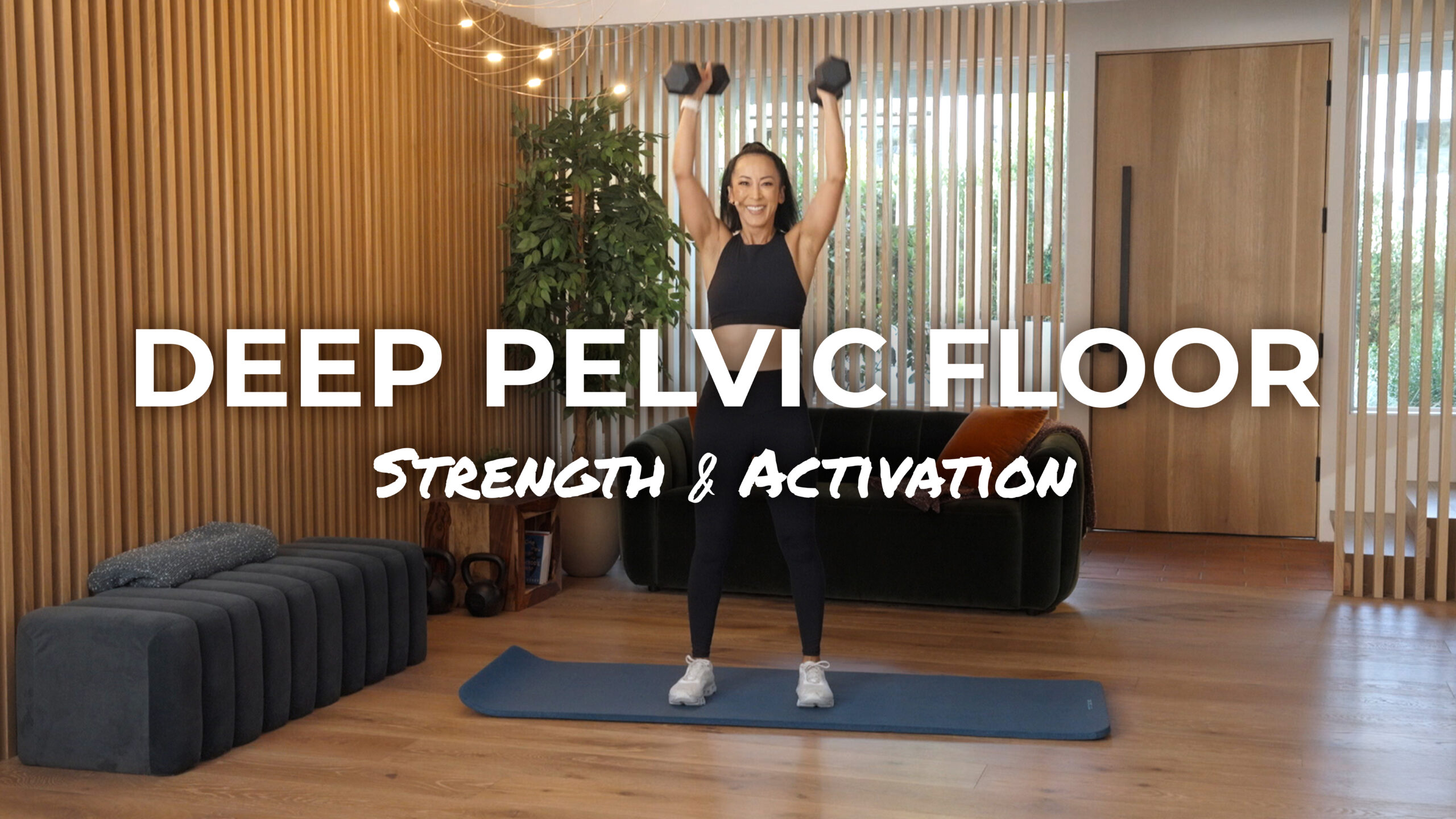
Deep Pelvic Floor Strength and Activation combines focused exercises, breathwork, and mindful movement to help you build strength, coordination, and a better connection to these important muscles.
How to Strengthen Your Pelvic Floor
The good news: pelvic floor muscles can respond well to training, including later in life.
And the evidence behind pelvic floor muscle training is strong. A landmark Cochrane review of 31 studies involving 1,817 women found that women with stress urinary incontinence who performed pelvic floor muscle training were much more likely to report being cured than women who received no treatment or an inactive treatment. Across different types of urinary incontinence, training also improved symptoms and quality of life.
Targeted pelvic floor exercises form the foundation. This includes both strengthening contractions (traditional Kegels) and relaxation/lengthening work, progressed gradually over time. Attention to technique matters enormously here — many women unknowingly bear down rather than lift when they attempt a contraction.
Functional movements such as squats, deadlifts, bridges, and split-stance exercises provide opportunities to practice coordinating the pelvic floor with breathing, core control, and whole-body movement.
Breath work can help you practice coordinating your breathing with pelvic floor and whole-body movement. Learning to exhale during effort, rather than habitually holding your breath, can also help you become more aware of how you manage pressure during exercise.
Lifestyle habits can play a role, too. Appropriate fluid intake, managing constipation and healthy bowel habits, reducing caffeine when bladder urgency is an issue, and maintaining a healthy weight can all be part of managing pelvic floor and bladder symptoms.
Our new MPC pelvic floor class brings all of these elements together in a structured, accessible format — designed to build strength, coordination, and confidence from the ground up, whatever your starting point.
Related: Protecting Bone Health After Menopause
When to Seek Professional Help
Exercise is a powerful tool for pelvic floor health, but it’s not a replacement for professional assessment when symptoms are significant. A pelvic floor physiotherapist (also known as a women’s health physio) specializes in assessing and treating dysfunction of these muscles. A pelvic health physiotherapist can assess pelvic floor strength, relaxation, and coordination and determine what type of treatment is appropriate. Depending on your symptoms and comfort level, this may include an internal assessment.
If you are experiencing prolapse symptoms, significant pain, or symptoms that haven’t improved with exercise over several weeks, seeing a specialist is strongly recommended. And if you’ve never had an assessment and you’re experiencing any of the symptoms described in this article — it’s worth making that appointment.
Pelvic floor physiotherapy is mainstream, effective, and nothing to feel embarrassed about. Think of it the way you would any other physiotherapy: you’d see someone about a shoulder injury. Your pelvic floor deserves the same care.
It’s Never Too Early — or Too Late
The pelvic floor is not a problem to manage. It’s a part of your body to understand, train, and care for — throughout your life, not just after things go wrong.
Whether you’re just starting to notice symptoms, you’ve been living with them for years, or you simply want to be proactive about your long-term health, now is the right time to start. Your pelvic floor is trainable, responsive, and very much worth your attention.
We designed this class because we believe that fitness should reach every part of you. Start where you are. Be consistent. And know that every rep counts — even the ones nobody can see.