

By Katy Loren
When we were younger, working out often meant chasing a certain look—flatter abs, toned arms, maybe squeezing back into a pair of jeans from college. But over time, those goals tend to shift. These days, it’s less about looking a certain way and more about feeling strong, capable, and energized in our own skin. Because let’s face it: life after 40 demands a different kind of strength—and we’re here for it.
And sure, we still want to look good—who doesn’t? But these days, it’s just as important to feel good. That means being able to climb a few flights of stairs without getting winded, lift your own carry-on into the overhead bin (before someone else grabs the last spot), or move through your day without pain or discomfort holding you back.
That ability to move freely and comfortably? It has a name: mobility. It’s something most of us never thought twice about in our younger years—but once you’re in your 40s or beyond, it suddenly moves way up the priority list.
If you’ve noticed more stiffness, aches, or just feel a little less agile than you used to, you’re not alone—and the good news is, you can absolutely do something about it. This quick guide breaks down what mobility really means, why it matters more as we age, and how to start improving yours with a few simple habits.
The Many Benefits of Mobility
“As a Pilates instructor for 50 years, I can tell you that it’s all about mobility,” says Risa Sheppard, a Westwood, California-based Master Pilates trainer and creator of The Sheppard Method Pilates. “We need to maintain our mobility into our later years, but we shouldn’t wait. I recommend incorporating mobility exercises into every workout, and starting that habit when you’re young.”
Regularly doing mobility exercises is key to keeping our joints, tendons, and supporting structures functioning well, adds British Olympian Samantha Clayton, a Los Angeles–based certified personal trainer and head of content at Sunny Health and Fitness.
“When we don’t include dynamic movements in our training routines, these areas can get stiff over time,” Clayton warns. “Without a full range of motion, physical performance can suffer, your posture might worsen, and, more importantly, you’ll increase the risk of imbalance and injury. By prioritizing mobility as part of your regular workout routine, you’ll ensure the body moves smoothly, and you can potentially reduce chronic pain and stiffness caused by poor range of motion, too.”
Related: The Difference Between Mobility and Flexibility
How to Spot the Sneaky Signs Of Poor Mobility
We all recognize an injury, typically in the moment it happens. Whether it’s a “pop” or a deep and sudden soreness, the situation is (painfully) obvious.
When it comes to our mobility limitations, however, they can often develop so slowly—over months or years—that we may not be fully aware. Instead, they just become part of our daily lives, and we shrug them off as if they were just a part of growing older. So it helps to know the signals that your mobility might just need a bit of attention in your training.
“You might struggle to perform basic movement patterns, like squatting properly or reaching overhead without discomfort,” Clayton explains. “Tightness, joint pain, and stiffness are other common signs, and they often worsen with certain exercises. A decrease in flexibility or strength, especially during dynamic movements, can also indicate that mobility is lacking and needs to be addressed.”
You might also notice signs like poor balance or a constant feeling of tightness when you bend or extend your joints. “Watch for signs of trouble standing up from a chair, an unstable gait or balance when walking, or even forgetfulness or memory impairment,” Sheppard says. “Also, you’ll want to identify and address your mobility if you’ve fallen in the past year.” (If any of these issues describe you, definitely make an appointment with your physician to make sure the symptoms aren’t indicative of a more serious underlying condition, and get your doc’s go-ahead to do mobility exercises.)
Move Better at Any Age
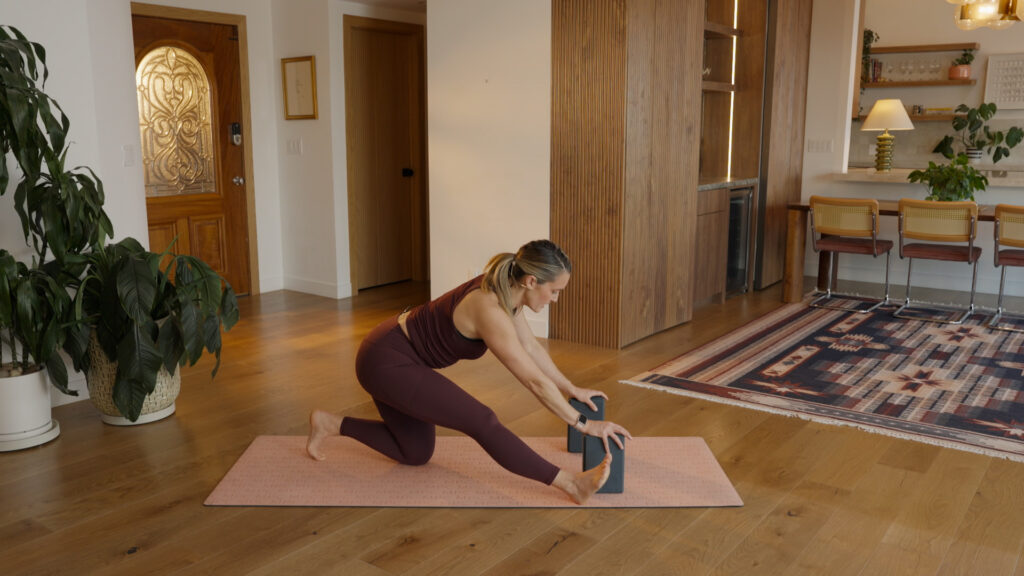
Ready to improve your mobility and feel more confident in your movement? Join Coach Melissa Mooney in this guided mobility program designed to increase your range of motion, support joint health, and help you move with greater ease in everyday life.
The Five Signs of Poor Mobility
Los Angeles personal trainer and former Mr. America Jason Kozma suggests watching out for the following to know if you need to make mobility moves a bigger priority:
• Stiffness or discomfort when performing basic movements (e.g., squatting, lunging, or reaching overhead)
• Difficulty maintaining proper form during workouts
• Frequent aches, pains, or joint discomfort
• Feeling tight in areas like the hips, shoulders, or lower back
• Limited range of motion in key joints, such as ankles, hips, or thoracic spine
Related: Why Yoga Belongs In Every Training Program
Your Mobility Moves
Now that you know the “whys” of mobility, it’s time to learn the “hows.” Our experts offer up an innovative exercise to improve the range of motion of your hips, two stretching and mobility circuits you can try for yourself, and for those inclined to try a fully immersive program, our own ultra-popular “Mobility” series.
1. Hip CARs
“Our hips are one area that often gets neglected, especially with all the sitting we do in our tech-driven lives,” Clayton says. “Sitting for long periods can tighten the hip flexors, limiting the range of motion in the hip joint. One great exercise to improve hip mobility is the Hip CAR (Controlled Articular Rotation). This movement works the hip joint through its full range, helping it to stay flexible and strong.”
How-To: To perform Hip CARs, start by standing or kneeling with good posture. If you need extra support, hold onto a post or sturdy surface for balance. Keep your upper body firm and still—this movement should come entirely from your hip. Lift one leg off the floor, bending your knee to 90 degrees. Begin by pulling your knee up toward your chest, then slowly rotate your leg outward, moving the knee away from your body. With your foot tilted upward, continue rotating the hip behind you in a controlled circular motion. Bring your knees back together to complete the arc. Then, reverse the movement to return to your starting position. One full circle in each direction counts as a single rep. Do several repetitions in each direction, then switch legs. Focus on moving smoothly and without pain. “Try adding Hip CARs to your leg day workouts or recovery days,” Clayton suggests.
2. Stretch Circuit
“Every workout should begin and end with a balance or mobility activity,” Sheppard says — i.e., movements designed to improve flexibility and your range of motion. She offers this circuit as an example:
• Knee-to-Chest Stretch: Lie on your back, bring your knees to your chest, and hug them with your arms. Hold for 10 seconds, repeat 5 to 10 times.
• Seated Knee Rotation: Sitting on the floor, sit up straight with your feet placed a bit wider than shoulder width apart, knees bent to 90 degrees. Maintain an upright posture, keeping your heels on the floor, and rotate your knees down to one side, then the other, until you’ve gone 10 times each way.
• Shoulder Flexion: Raise your arms overhead — like you’re reaching for the stars — to stretch the chest and shoulders. Hold for 5 to 10 seconds and release. Repeat 10 times.
• Cat-Cow Stretch: This yoga move is excellent for the spine and core. From an all-fours position on the floor, slowly and deliberately alternate between arching and rounding the spine to increase spinal flexibility. Do for 2 to 3 minutes total.
• Neck Rotation: From a standing, seated, or kneeling position, slowly roll your head clockwise and counterclockwise. Do for 2 to 3 minutes total.
3. Full-Body Mobility Flow
“This routine targets key areas like the hips, spine, and shoulders while improving your body’s overall movement patterns,” Kozma says. It’s a good option for off days or before or after a regular workout. You’ll do each of the following five movements for 30 seconds (or 30 seconds per side if applicable), repeating for 2-3 rounds total:
• World’s Greatest Stretch: This is a lunge combined with a spinal twist. Step forward into a deep lunge, place one hand on the floor, and rotate your opposite arm upward. Repeat on the other side.
• Cat-Cow Stretch: This is the same move as in the above stretch circuit — on your hands and knees, slowly alternate between arching and rounding your spine.
• Seated Knee Stretch: Again, this is a repeat from the Stretch Circuit above — sit on the floor with both knees bent at 90-degree angles, and rotate your legs side to side.
• Thoracic Spine Rotation: Starting on your hands and knees, place one hand behind your head and rotate your elbow toward the ceiling. Repeat on the other side.
• Deep Squat Hold and Shift: From a standing position, lower your hips into a deep squat. Hold it there as you gently shift your bodyweight side to side to mobilize your ankles and hips.
4. The MPC Mobility Program
If you’d like a more encompassing and thorough mobility workout plan, My Peak Challenge has a solution — our new Mobility series. Coach Melissa Mooney has created a series of videos that guide you through training sessions aimed at improving range of motion, enhancing joint health, and giving you greater confidence in your everyday movements. Check out the main program by clicking here — and for our “Revive: Mobility” sessions, click here.
Mobility Is the Foundation of Lifelong Movement
Our programs help you build strength, stability, and confidence—so you can keep doing what you love,
for years to come.