


By Katy Loren
Please don’t be offended by what I’m about to say — but you might just be guilty of trying to do too much.
That might sound counterintuitive. You’re a proud Peaker, after all. Showing up, challenging yourself, trying new things — that’s what this community is all about.
And, yes, we love that energy.
But there’s a tipping point. Going too hard, too fast, and chasing everything at once can start to work against you. As my editor put it when she asked me to write this, “It’s starting to feel like Overtraining Central because everyone wants to do all the things.”
The truth? More isn’t always better. Better is better.
What actually moves you forward—what helps you build strength for life—is consistency, recovery, and knowing when to push and when to pull back. It’s not about cramming in as much as possible. It’s about doing what matters, well.
That’s where volume control comes in: finding that sweet spot between doing enough to support your goals, without tipping into fatigue, burnout, or injury.
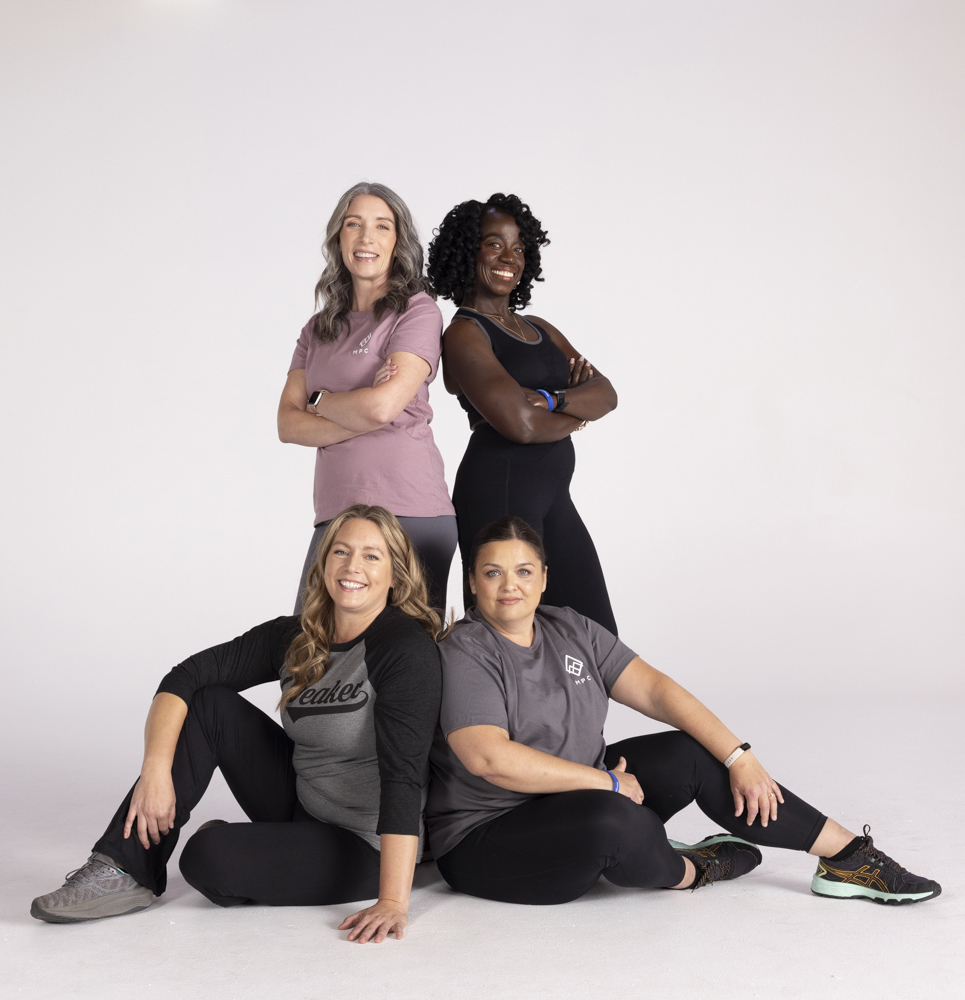
To help you find your balance, we’ve asked four experienced trainers to share their approach to training smarter. From how often you should work out (and how long your sessions need to be), to choosing the right weights, gauging cardio intensity, and deciding if a max test is right for you—this is about helping you train in a way that actually works for your life.
Why More Isn’t Always Better
If a short workout is good, it only makes sense that a longer workout is even more productive — right?
Not exactly.
“I hear this all the time — and honestly, it’s one of the biggest mistakes people make,” says Ilyse Cohen, a Los Angeles–based fitness trainer and the creator of the dance fitness program Dancinerate. “More is not always better — better is better. Your body doesn’t change during the workout; it changes when you recover from it. If you’re constantly going hard with no rest, no sleep, and no balance, you’re not getting stronger — you’re just getting tired.”
It’s a simple shift, but an important one. The goal isn’t to leave every session completely wiped out; it’s to train in a way you can come back to again and again.
Or as Cohen puts it: “Consistency beats intensity every time.”
That idea shows up again and again inside My Peak Challenge. It’s not about doing everything — it’s about doing what works, and doing it well.
Gretchen Zelek, owner of Go Gretch in Los Angeles, AFAA-certified group fitness instructor and Functional Aging Specialist, agrees. “Training smarter means being mindful of the intensity of your workout,” she says, “while also recognizing recovery as a crucial part of a successful workout regimen.”
In other words, it’s not just what you do, it’s how you balance it.
Here are her go-to guidelines for getting more out of your training without pushing too far:
- Keep it focused: Aim for workouts under an hour; 45 minutes is often the sweet spot.
- Train with intention: Instead of adding more sets, choose a weight that challenges you and work toward quality reps with good form.
- Build in recovery: This is where progress actually happens. Recovery gives your muscles the ability to rebuild, helps to release lactic acid, and reduces the risk of injury and reduces inflammation. Recovery can include walking, breathwork, restorative yoga, foam rolling, stretching, and swimming.
- Support your training outside the workout: Other things to consider are maintaining a healthy diet and adequate hydration, getting plenty of sleep, and reducing your stress.
The Takeaway
“One of the biggest misconceptions in fitness is that progress only happens during the workout,” explains Hawaii-based trainer Dr. Desi Bartlett, CPT, E-RYT, creator of The BodyMind Workout. “In reality, we get stronger during recovery. That’s when the body repairs muscle tissue, replenishes energy systems, and adapts to the training stimulus.”
That means the goal is to train with intention, and balance effort with recovery so the body can adapt, grow stronger, and stay injury-free over time.
Related: Progress Over Perfection
How Often Should You Work Out?
Your ideal training week isn’t just about your goals; it’s about your experience level, your schedule, your energy and what else life is asking if you.
“For most people, three to five days of structured exercise per week works well when it includes a mix of strength, cardiovascular work, and mobility,” says Bartlett, the 2025 IDEA® Health & Fitness Association Fitness Leader of the Year. “I also remind clients that recovery practices like yoga, walking, and gentle movement still count as training because they support the nervous system and help the body adapt.”
Not every session needs to be intense to be effective, and not every form of movement needs to feel like a workout to count.
Cohen sees this play out often, especially with people trying to do too much in too little time. “Someone with a busy life will always do better with shorter, consistent workouts than long workouts they can’t keep up with, she says. “You don’t need to train for 90 minutes to get results. A focused 30- to 45-minute workout can be incredibly effective. When workouts get too long too often, recovery suffers, and that’s when injuries start to show up.”
Inside My Peak Challenge, that’s exactly why you’ll see a mix if shorter session, longer workouts and recovery-focused options — so you can build a routine that actually fits your life, not the other way around.
Zelek recommends a simple, balanced approach:
- Start with three full-body strength sessions per week if you are newer to training.
- Build toward a mix of strength and cardio. For example, three strength sessions and two to three cardio sessions across the week.
- Include recovery days. These are part of the plan, not a break from it.
- Train the whole body and vary your approach. Rotate between free weights, bodyweight, bands, and other modalities to avoid overworking one area and to build well-rounded strength.
The Takeaway
“For most people, 3 to 5 days a week, 30 to 60 minutes a day is plenty, especially if you’re balancing work, kids, and life,” says Sara Haley, a Los Angeles–based fitness expert specializing in pre- and postnatal training.
But she also offers a mindset shift that might matter even more: “Something is always better than nothing.”
That might look like a full workout, or it might look like walk or 3 sets of 10 squats today. It all counts because the goal isn’t to follow a perfect plan; it’s to build a routine you can stick with.
Lifting: How to Choose the Right Weight
Lifting heavier can be powerful — but only if you’ve earned it.
“The most common signs someone is going too heavy is when they start using momentum instead of muscle, or they feel joint pain instead of muscle fatigue,” says Cohen. “I also see people who seem to need to psych themselves up for every set. Not every workout should feel like a competition. I want my clients to feel strong, not wrecked. If you can’t control the weight, the weight is controlling you.”
On the other end of the spectrum, going too light can stall your progress. “Training too light usually shows up when someone finishes a set feeling like they could easily keep going,” Bartlett explains. “One helpful way to gauge intensity is the Rate of Perceived Exertion, or RPE.
On a scale from 1 to 10, most strength work should feel like about a 7 or 8 out of 10. That means the work feels challenging, but you could still perform a couple more repetitions with good form if needed.
If you finish a set with no muscle fatigue, can easily hold a conversation the entire time, or feel like you could keep going easily, the load is likely too light. “Ideally, the final two or three reps of a set should feel demanding while still maintaining good alignment and control,” says Bartlett.
Cohen — who also works as a real estate agent with The Agency in L.A. — offers these tips on determining when it’s time to increase your weight:
• Your form is solid and consistent from start to finish.
• You can complete all prescribed reps in a given set.
• You feel normal muscle fatigue, not joint pain.
• The last few reps feel challenging, but you should still be in control.
If you can talk, scroll your phone, and do 20 more reps, it’s too light; if your form falls apart halfway through the set, it’s too heavy. Progress should feel strong, not scary.
The Takeaway
“If your form is breaking down, your joints are hurting instead of the muscle you’re training, or you’re holding your breath and muscling through reps, the weight is too heavy,” Haley says. “But if you finish a set and feel like you could have done 5 to 10 more reps, that’s too light. You should feel challenged by the last few reps, but still in control and with good form.”
Fitness That Fits Real Life
Built for real women with real lives: busy schedules, changing bodies, limited time. 100+ on-demand workouts, expert guidance, and a global community mean less planning, more doing. No perfection. No pressure. Just support that helps you keep showing up.
Cardio: Zone In on the Right Intensity
When you’re lifting, progress is easy to see. You go from six-pound dumbbells to eight, and you know you’re getting stronger.
Cardio isn’t as obvious. So how do you know if you’re working at the right pace, not too easy, not too all-out every time?
“I like using both heart rate and RPE — rate of perceived exertion,” says Cohen. “On a scale of 1 to 10, most cardio should feel like a 6 to 8. You’re breathing hard, you’re working, but you’re not completely wiped out. You should be able to talk in short sentences but not give a full speech.
If every workout instead feels like a 9 or 10, that’s not training — that’s a direct road to burnout. The sweet spot is where you feel challenged, energized, and able to come back the next day,” she continues.
Zelek points to another way to measure effort: the Borg Scale.
“It is based on a scale of 6 to 20, where 6 represents no exertion, 13 is ‘somewhat hard,’ and 20 is maximum exertion,” she explains. “The numbers correlate by 10 times the heart rate of a healthy adult. For instance, if you felt you were at the very top of your exertion levels and feeling 15, your heart rate would probably be close to 150 BPM.”
If you prefer something more precise, wearable tech can help you track heart rate zones.
First, to determine your maximum heart rate, you can use the Tanaka formula, which is designed especially for older adults: 208 – (0.7 x your age).
From there, you can calculate training zones. For instance, a 50-year-old’s max heart rate would be 50 x 0.7=35; 208-35=173.
That would break down like this:
| Intensity Level | Percentage MHR | 50-Year-Old HR |
|---|---|---|
| Low intensity | 50%-60% | 86-103 |
| Fat burning | 60%-75% | 103-130 |
| High intensity | 75%-90% | 130-155 |
The Takeaway
“There are a few ways to measure intensity, but I often start with something simple like RPE,” suggests Bartlett. “On a scale of one to 10, most cardiovascular training should land somewhere around a seven. You’re working, but you could still speak in short sentences.
Heart rate can also be helpful, but I encourage people to develop awareness of how their body feels while exercising,” she continues. “If someone finishes a cardio session completely depleted every time, that’s usually a clear sign that the intensity is too high. The goal is to build cardiovascular fitness while still leaving the body with enough energy to recover and train again.”
Related: Zone 2 Cardio
To Max or Not to Max
There’s a time and place for max effort, like testing your heaviest lift or pushing for a new speed or distance. But it’s not every workout, and for many people, it’s not even most workouts.
“I use max efforts sparingly — for experienced clients, testing progress, or specific goals,” Cohen says. “Most people don’t need to train at their max to see results. They need smart programming, good form, and consistency. Real progress comes from training hard enough to improve, but not so hard that you can’t recover.”
Bartlett agrees, noting that for many people, the focus is better placed on consistent progress, solid mechanics, and staying injury-free.
In her view, situations where max testing is usually not appropriate include:
- New to training and still learning movement patterns
- Recovering from an injury
- Dealing with high stress, poor sleep, or low energy
- Still building consistency with your workouts
“In many cases, building strength that supports daily life, posture, and long-term health is far more valuable than chasing a single maximum number,” Bartlett adds.
The Takeaway
Max effort can be a useful tool, but it’s not the goal.
The goal is to build strength you can use in your workouts, in your daily life, and over the long run. Strength that feels steady, reliable, and repeatable.
Because at the end of the day, it’s not about what you can lift once. It’s about what your body can do, again and again.