
By Katy Loren
Something happened to me in bed recently that completely surprised me — and not in a good way.
I was simply rolling from one side to the other when a sharp, unexpected pain shot through my knee. Out of nowhere, my hamstring seized so tightly that I couldn’t straighten my leg. For a moment, I genuinely wondered if I’d even be able to stand up, let alone get on with my day.
After a few tense minutes, the pain eased, but I still spent the next day hobbling around with ice packs and compression wraps, trying to coax the muscles back to normal.
The culprit? Most likely my volleyball match the night before. And while the twenty-somethings on the court probably bounced out of bed the next morning without a second thought, my body had its own plan — one that reminded me, not so gently, that age and recovery don’t always move at the same pace.
There’s no stopping the years from adding up, but there are ways to better understand how well we’re aging. For those of us in midlife and beyond, it can be reassuring — and empowering — to know how our bodies are functioning, how resilient we are, and where we might need a bit more support.
“Longevity has become a major topic in the health, wellness, and medical fields because research consistently shows that our daily activity levels and overall lifestyle choices have a powerful influence on how long and how well we live,” says Los Angeles–based fitness consultant and former Olympian Samantha Clayton, head of content for Sunny Health & Fitness.
In simple terms, “longevity” refers to living a long, healthy life marked by strong physical function, lower disease risk, and confidence in doing the things you enjoy.
“One of the most practical ways to monitor your own longevity potential is by regularly assessing your fitness level through simple functional tests,” she says. “Performing them every 8 to 12 weeks helps you track changes in mobility, strength, balance, and overall physical capability, so you can make adjustments before slight declines become long-term issues. Each time you do the tests, strive to beat your previous scores.”
Here are three popular, easy-to-try assessments that require minimal equipment and just a few minutes — but can give you valuable insight into your long-term health.
Test 1: Sit-and-Rise
What It Is: “This test measures how easily you can lower yourself to the floor and stand back up without using your hands or knees for support,” Clayton says. “Research indicates that individuals who perform well on this test tend to maintain better mobility, joint health, and muscular control as they age. Poor performance is linked to cardiovascular and all-cause mortality risk.”
How To Do It: Put a mat on the floor and stand on it. Cross one leg in front of the other with both feet flat on the floor, elbows bent and arms out to your sides, hands in the air. From there, lower your body by lowering your hips under control as you also bend your knees to bring yourself down under control toward the floor. Your back foot will come up onto the toes, and your front foot should stay flat as you bring your glutes all the way until they make contact with the ground. You’ll end with your ankles crossed in front of you and knees up. That’s part one.
For part two — standing back up, again without your hands used for support — lean forward to generate momentum as you bring your hips back upward and extend your knees. Your lower legs will remain crossed until you reach a balanced, standing position. At that point, uncross your legs and reset yourself into a regular, feet side by side stance.

Scoring: “If you can lower yourself to the floor and rise back up smoothly without using your hands, touching your knees down to the floor to assist, or losing balance overall, you have good functional mobility,” Clayton notes. “If you need multiple points of support in order to complete the exercise or you otherwise struggle to stand, that indicates you have areas of weakness to work on.”
Improve Your Performance: If you have difficulty getting up off the floor without assistance, you can train specific muscles to make it easier, Clayton asserts. “The key is to focus on exercises that build leg strength and hip mobility,” she says, “such as squats, lunges, hip hinge drills, planks on the hands or knees, and simple seated to standing movements (off a chair or box).”
Test #2: Grip Strength
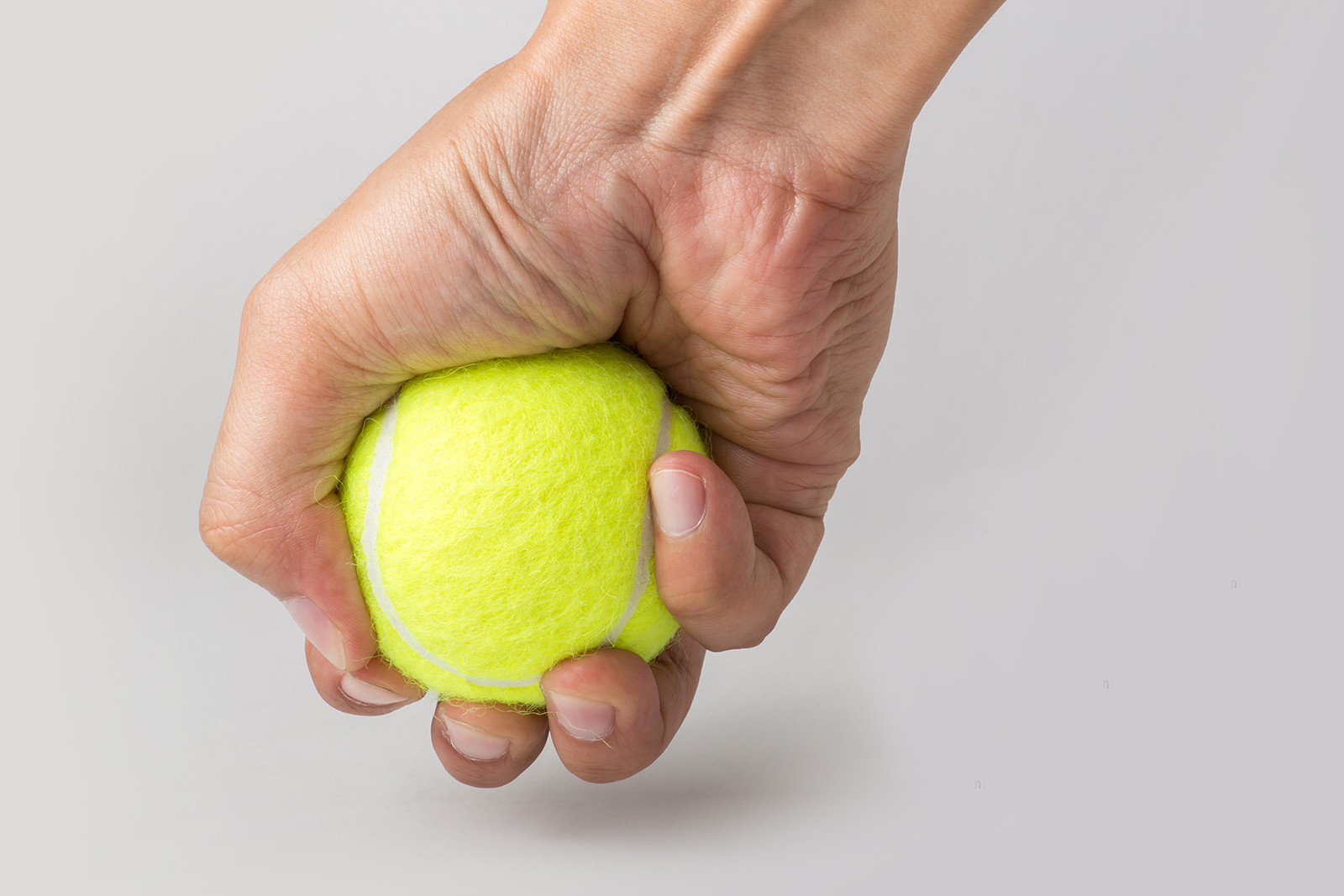
What It Is: “Grip strength is linked to longevity because it reflects total-body strength, nervous system function, and overall resilience,” says Clayton. “A hanging grip strength test evaluates how long you can hold onto a bar while your body hangs freely.”
How To Do It: While there is a tool called a “handgrip dynamometer” that fitness professionals use for grip tests, you can also do it by simply using a pull-up bar at your gym. For the assessment, step or jump up to grasp the bar with an overhand grip, hands placed shoulder-width apart, and then let yourself hang down with elbows extended and shoulders relaxed, knees bent so that they clear the floor if needed. Hold on for as long as you can, timing yourself as to how long you can do so (or have a partner watch the clock for you).
Scoring: “If you can hang from a bar with control for 20 to 30 seconds or longer, your grip strength is solid,” Clayton says. “If your hands start slipping quickly, you find yourself swinging your body, or drop off the bar within a few seconds, that signals that your grip endurance needs improvement.”
Improve Your Performance: You’ll need regular practice with pulling and gripping movements. “The following exercises all help strengthen the forearms, upper back, and shoulders, which contribute to greater grip endurance over time,” Clayton explains. “Try dead hangs (i.e., the basis of the grip test outlined here), farmer’s carries, towel hangs, and barbell, dumbbell, machine, or kettlebell rowing.”
Related: Get a Grip
Test #3: Balance
What It Is: “A balance test provides insight into your neuromuscular coordination and how efficiently your body manages stability,” Clayton says. “Good balance is associated with a reduced fall risk and better long-term independence.”
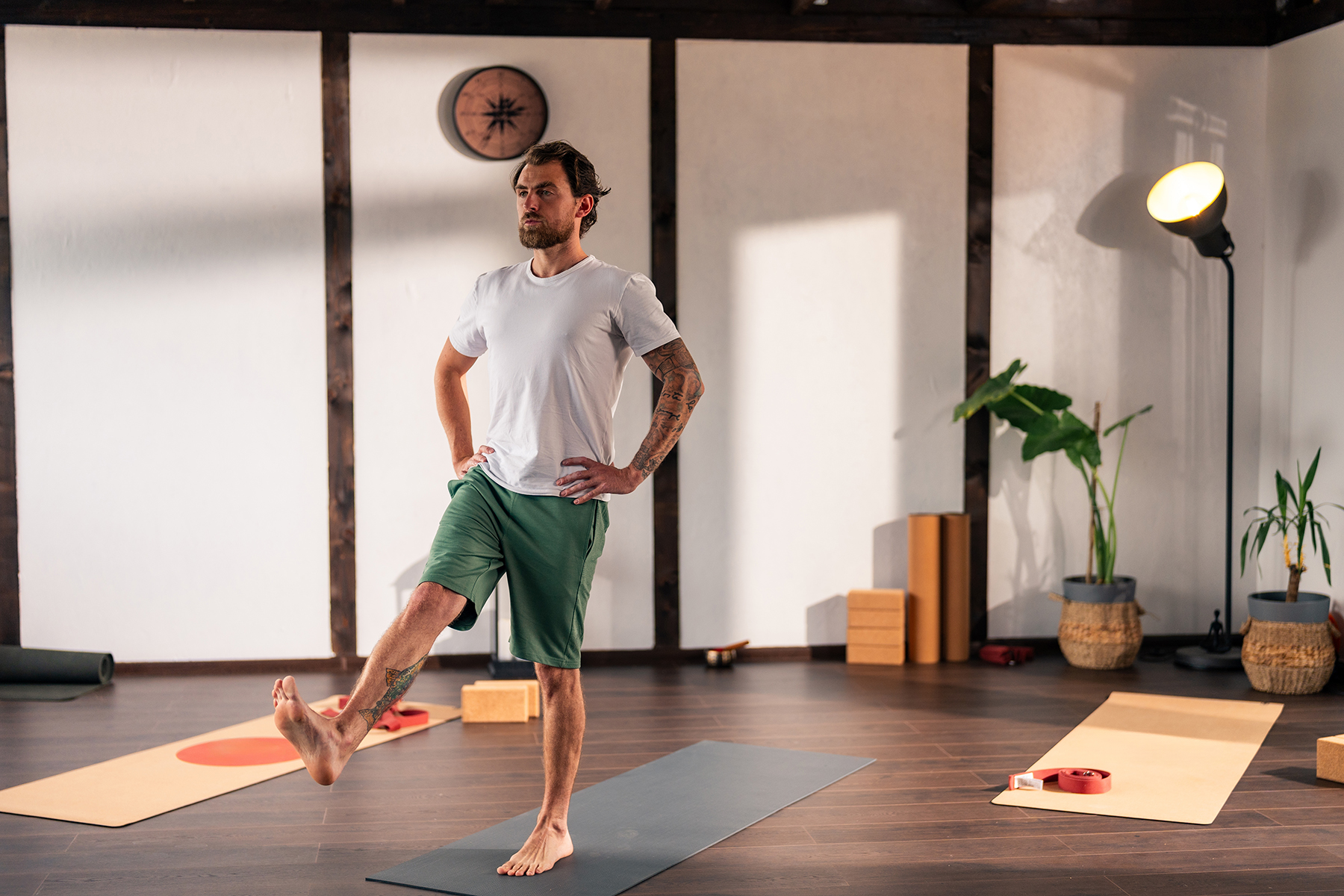
How To Do It: For this, you’ll stand upright with your feet together and body straight from head to heels. From here, bend one knee so that you are balancing on one foot. Hold that position for as long as you can, then switch legs and repeat. Note that you can add a degree of difficulty by closing your eyes for this test.
Scoring: “If you can stand steady on one leg for 20 to 30 seconds without wobbling or putting your foot down, your balance is excellent,” says Clayton. “However, frequent loss of balance or needing to tap your foot down shows that your stability requires improvement.”
Improve Your Performance: “Enhanced balance comes from incorporating exercises that challenge your stability, such as single-leg stands, heel-to-toe walking, or slow and controlled step-ups,” Clayton suggests. “Also, gentle core activation drills, such as dead bugs or bird dogs, build the body’s ability to stabilize and stay steady during daily activities.”
Related: A Stronger Core and Better Balance
Ready to Build Your Longevity?
Stronger balance, mobility, and resilience don’t happen by accident — they come from consistent movement and the right guidance. Join My Peak Challenge for a full year of coaching, community, and programs designed to help you stay strong for life.