
By Katy Loren
We all have our own reasons for moving—whether it’s training for a first marathon or working toward a long-awaited weight loss goal, fitness tends to look different for everyone.
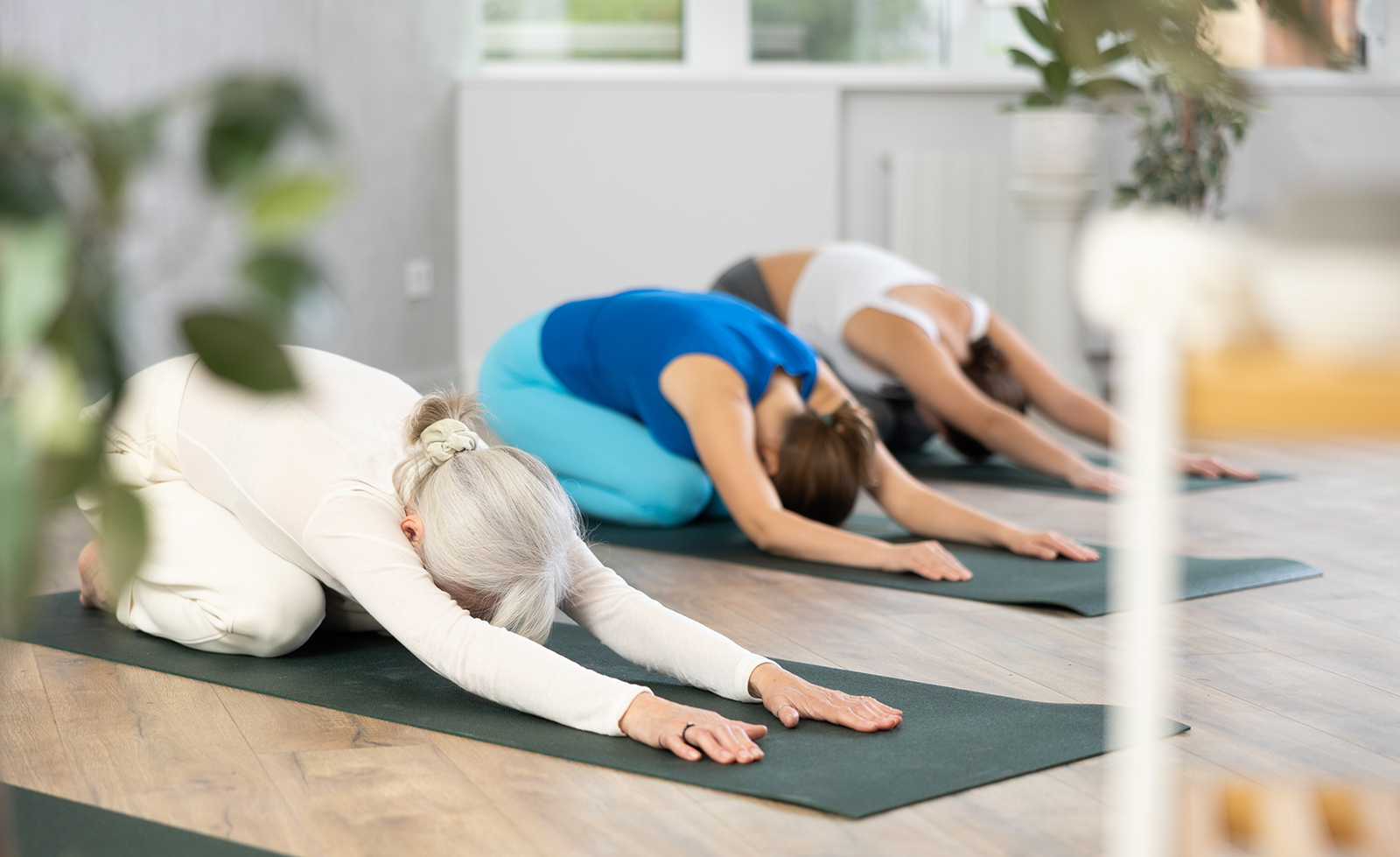
But no matter where you are on the journey, some goals are universally beneficial. Building a stronger core and sharpening your balance are two that should make everyone’s list. From daily movement to injury prevention, they’re the kind of upgrades that support everything else you do.
“My 20-minute yoga flow will awaken the critical muscles within your deep core, improve your overall postural stability, and help you build balance from the ground up,” says Darlene Kalina Salvador, a Southern California–based yoga instructor, personal trainer, and outdoor enthusiast.
Balance Begins At the Core
The core encompasses the abdominals — those “six-pack” muscles many of us admire — but their real value goes beyond their looks. “When your core is strong, everyday activities such as carrying groceries, getting up off the floor, or even just getting out of bed feel more supported,” Salvador says. “A strong core helps you stay upright, coordinated, and moving with ease, especially as we age and want to stay active and pain-free.”
As for balance, that’s something we tend not to give much consideration to in our younger years, but it becomes much more vital over time. In fact, according to the U.S. Centers for Disease Control, one in four seniors aged 65 and older experiences a fall at least once a year, with nearly 40% of those resulting in an injury that requires medical treatment. “When you start to work on your balance now, you are investing in your future mobility,” Salvador points out. “Think of it as an insurance policy for staying strong, independent, and resilient for your golden years.”
This yoga flow includes 10 movements that each enchance core strength, agility, and proprioception (your body’s internal sense of its positioning and movement within space). All you need is a mat, and if you’d like a little extra support, grab a yoga block or even a pillow. The time suggestions in parentheses are based on a 15-minute session, though the movement portion itself runs just over 13 minutes.
To make the most of your time, consider beginning or ending with a quiet moment of breathwork or standing meditation. Whether you take a few deep inhales before you begin or spend a minute afterward soaking in the effects, even a brief pause can help you ground your energy and carry the benefits with you into the rest of your day.
Related: Why Yoga Belongs In Every Training Program
The Better Balance Flow
1. Supine Core Activation + Diaphragmatic Breathing (2 minutes): Lie on your back with your knees bent, feet hip-width apart. Place one hand on your belly, the other on your chest. Inhale through your nose, allowing your belly to rise; then slowly exhale through the mouth, drawing your navel inward gently toward your spine. As you do this, try to keep your pelvis in a neutral, not-tilted position. Continue breathing in this pronounced fashion for two minutes.
2. Dynamic Bridge + Overhead Reach (1 minute): Lie on your back with your knees bent, feet flat and hip-width apart on the floor, your arms resting by your sides. To start, inhale as you press through your feet to lift your hips into the “bridge pose” — body straight from your shoulders to your knees in an incline position. At the same time as your hips rise, reach your arms up and overhead toward the floor behind you. Hold the top for a moment, then exhale as you lower your hips and arms back down to the start. Repeat the sequence fluidly for 60 seconds, remembering to breathe while focusing on lightly activating your glutes and hamstrings, and keeping the core drawn in to avoid overextending your low back.
3. Supine Dynamic Core Twist (1 minute): Start by lying on your back with your knees bent and legs lifted into tabletop position—knees stacked over hips, shins parallel to the floor, and your calves gently touching your hamstrings. Extend your arms out to the sides in a T-shape or a cactus shape (elbows bent). Inhale as you slowly lower your knees to the right, keeping your shoulder blades grounded and bringing your knees toward the floor (or as close as feels comfortable). Exhale as you engage your obliques to return your knees to center. Repeat the movement to the left side, inhaling as you lower and exhaling as you lift back to center.
Alternate sides for 30 seconds. “This movement awakens your spinal rotation while strengthening the obliques and transverse abdominis,” Salvador says.
4. Dead Bug (1 minute): Begin lying on your back with arms reaching toward the ceiling and knees bent to tabletop position. Your low back should be gently pressed into the mat — avoid arching. Breathe in to prepare, feeling your ribcage expand, then exhale as you slowly extend your right arm overhead and left leg forward, both hovering just off the floor. Maintain strong core engagement, drawing your navel toward the spine to keep your low back anchored. Inhale as you return to center, then exhale as you repeat the motion, this time extending your left arm and right leg. Continue alternating sides with smooth, steady breathing for one minute. “Move with intention — aim for control, not speed,” Salvador instructs. “If you need to modify this to make it a little easier, make your extension movements smaller, or tap the heel of the extended foot on the floor.”
5. Cat-Cow Spinal Mobility (1 minute): Start in a tabletop position — hands under shoulders, knees under hips. Lift your chest and tailbone as you inhale, letting your belly drop toward the mat (cow pose). Now, exhale and round your spine, pulling your navel up (cat pose). Continue gently flowing through cat and cow for 60 seconds. Engage your deep core on each exhalation to promote spinal stability and awareness.
6. Bird Dog with Knee-to-Elbow (1 minute, 30 seconds): Start in a tabletop position — wrists under shoulders, knees under hips, spine neutral. Inhale and extend your right arm forward and your left leg back, reaching long from your fingertips to your toes. Draw your navel inward to stabilize the spine, keep your hips level, and avoid over-arching your low back. Next, exhale while slowly drawing your elbow to your knee under your body, rounding slightly through the spine as you contract your core. Inhale as you extend again under control. Repeat for four to six reps in total before switching sides. Slightly widen your stance if you find it’s needed to improve your balance during the motion.
7. Downward Dog to Plank Flow (2 minutes): Begin in a tabletop position, then tuck your toes and lift your hips up and back into downward-facing dog. Your hands should be shoulder-width apart, and your feet should be hip-width apart. Press firmly through your palms and lengthen your spine. Next, inhale as you shift yourself forward into a high plank, shoulders stacked over wrists, body in one long line from head to heel. Activate your thighs, gently engage your glutes, and pull in your belly toward your spine. Hold the plank for three slow breaths, maintaining straight alignment. Then breathe out and raise your hips up and back to return to downward dog. Repeat this flow three times total with mindful movement. “Focus on maintaining your body stability through transitions — let your core guide the shifts, not momentum,” says Salvador.
8. Half Sun Flow + Core Awareness (1 minute, 30 seconds): From a standing position, inhale to reach your arms overhead into an extended mountain pose. Breathe out, hinge from the hips, and fold forward with soft knees. Then breathe in, lift yourself up halfway — spine long, fingertips on shins or thighs. Exhale and fold fully down again, allowing your head and neck to release. Inhale, and now rise all the way up, arms sweeping wide. Finally, breathe out while bringing your hands to the heart center. Repeat for four to five slow rounds, using each transition to draw awareness to the core and your spinal alignment. “Move like water — fluid but rooted,” Salvador adds.
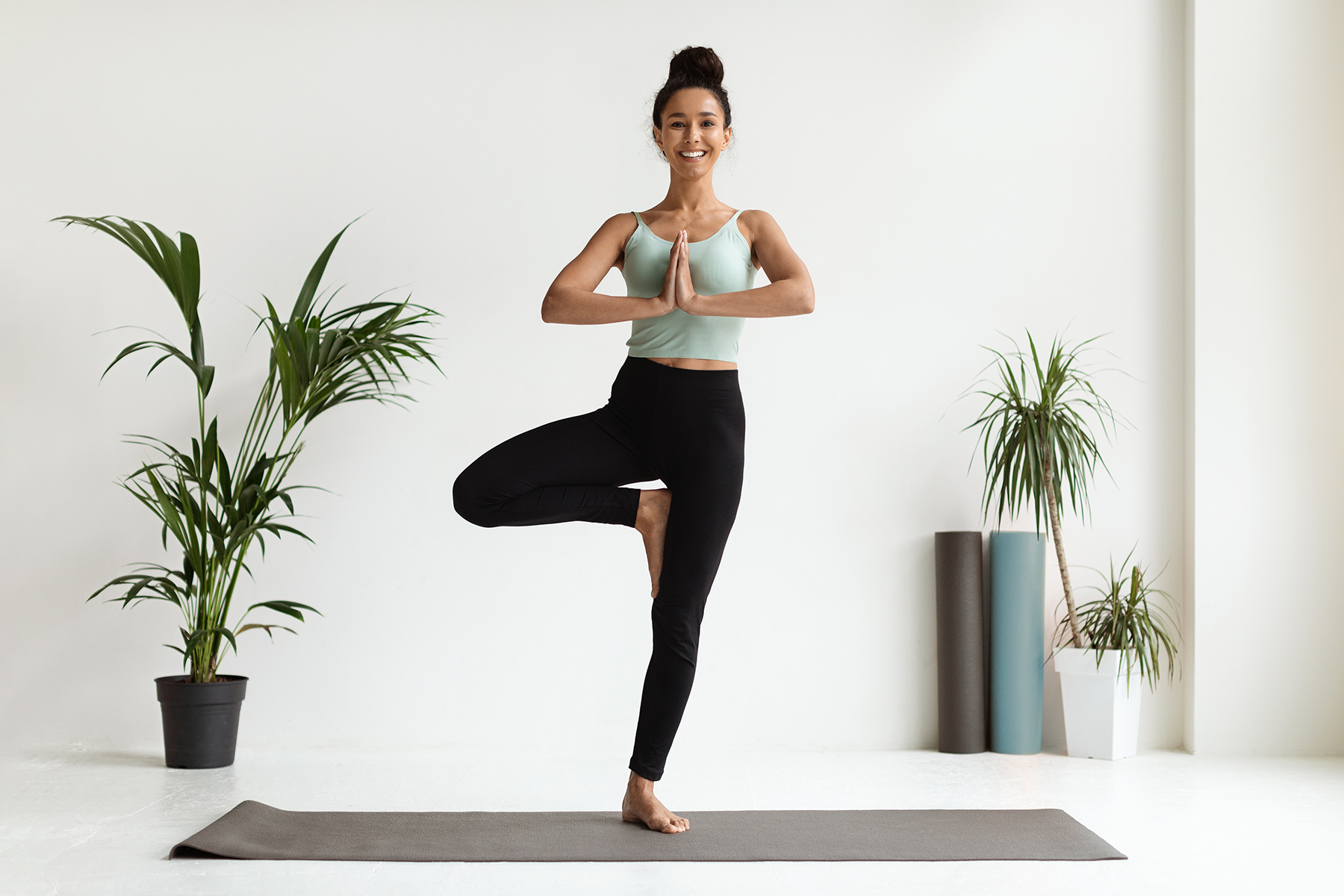
9. Tree Pose (1 minute, 30 seconds each side): Stand in mountain pose, grounding evenly through your left foot. Shift your weight onto your left leg. Lift your right foot to rest on the inner ankle, calf, or thigh of your standing leg, but avoid the knee joint. Bring your hands to your heart or extend them overhead. Press your foot into your leg and your leg into your foot — feel the inner thighs and core activate together. Soften your gaze to help with balance, holding the pose for 30 seconds before switching sides. “Concentrate on standing tall, breathing deeply, and finding stillness in the pose,” Salvador instructs.
10. Mountain Pose + Standing Meditation (1 minute): Stand tall with your feet about hip-width apart, arms resting by your sides. Close your eyes or soften your gaze toward the earth. Inhale and lengthen through your spine, growing tall through the crown of your head. Next, exhale while maintaining that length, then soften your shoulders down away from your ears.
To close your practice, bring your hands to your heart center, and gently bow your head toward your heart.
Related: Improve Your Mobility At Any Age
Join the Movement.
Find Your Center
Peakers know: small steps lead to powerful change. Join the community and start your balance journey today.