


By Maureen Farrar
Here’s the part most fitness advice skips: The workout is only part of what makes you stronger.
Exercise provides the stimulus. It challenges your muscles, draws down energy stores and signals your body that it needs to adapt. Much of the repair, rebuilding and adaptation you’re training for happens afterward, during the hours between workouts.
That makes recovery part of the training process, not simply the time you spend waiting for your next workout.
And in midlife, recovery deserves as much intention as training.
Hormonal changes can affect sleep, muscle and connective tissue. Life stress can compete with training stress. And as we age, getting enough protein and other nutrients becomes increasingly important for maintaining and building muscle.
None of that means you need to stop training hard. It means being strategic about what happens between those hard workouts can help you get more from the work you’re already doing.
What Recovery Actually Is
Recovery is the work your body does in response to training: replenishing energy, repairing and rebuilding tissue, and adapting so it can better handle the challenge next time.
That process requires resources. Your body needs enough energy and protein, adequate sleep and enough time between challenging efforts. Miss one occasionally and it’s probably no big deal. But when recovery consistently falls short, fatigue can accumulate faster than your body can adapt — and eventually start working against the progress you’re trying to make.
Why Midlife Changes the Recovery Conversation
Estrogen isn’t only a reproductive hormone. It also plays a role in skeletal muscle and connective-tissue biology, and researchers are continuing to investigate how hormonal changes during the menopause transition affect muscle, tendons and the body’s response to exercise.
But hormones aren’t the only thing changing.
Midlife can bring sleep disruption, greater demands on your time, changes in body composition and years of accumulated aches and injuries. Put those together, and the training-and-recovery balance that worked for you at 30 may not always be the one that works for you now.
That doesn’t mean your body is less capable. In fact, strength and fitness remain highly trainable through midlife and well beyond it. It simply means recovery deserves a place in the plan rather than being whatever happens after the workout is over.
Sleep Is Part of Your Training Plan
Sleep may be one of the least glamorous recovery tools available — and one of the most important.
While you sleep, your body carries out processes involved in tissue repair, hormone regulation, energy metabolism and the adaptations that follow exercise. Poor or insufficient sleep can also affect how hard a workout feels, how well you perform and how ready you feel to train again.
Midlife can complicate that equation.
Sleep problems become more common during the menopause transition, and hot flashes and night sweats can repeatedly interrupt sleep. That means spending eight hours in bed doesn’t necessarily mean getting eight hours of restorative sleep.
You can’t always control whether you wake up at 3 a.m. But you can treat sleep as part of your training strategy rather than something you sacrifice to squeeze in one more thing.
Sometimes the best thing you can do for tomorrow’s workout is go to bed.
Put Recovery Into Practice
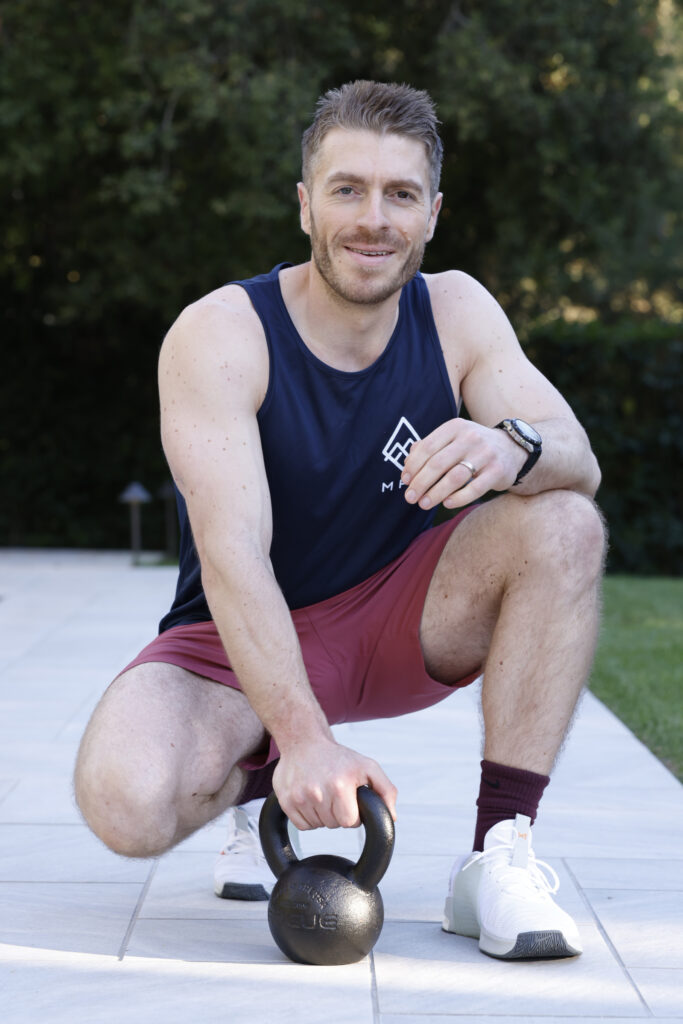
Not sure what recovery should actually look like? Coach Valbo breaks down simple recovery techniques you can use between workouts to help your body reset, recharge and get ready for what’s next.
WATCH: Coach Valbo’s Recovery Tips →
Your Body Doesn’t Experience Training Stress in Isolation
Your muscles may know that you did squats yesterday. Your body also knows you had a stressful day at work, slept five hours, skipped lunch and are worried about someone you love. Training is only one source of stress.
Psychological stress, poor sleep, illness, inadequate nutrition and demanding workouts can all contribute to your overall load. That’s why a training plan that feels great during one season of life can suddenly feel much harder during another, even when nothing about the workouts has changed.
This doesn’t mean stress is bad or that you need to live in a permanent state of calm before you can get stronger. It means your capacity to recover isn’t fixed.
On a well-rested, well-fueled week, you may have plenty in the tank for a challenging workout. When life is already asking a lot of you, you may not. Adjusting your effort or taking an extra recovery day isn’t failing the program. It’s accounting for the whole load your body is carrying, not just the part that happens in the gym.
Protein Matters More Than You Might Think
Muscle repair requires raw material, and protein provides it.
As we age, muscle can become less responsive to the anabolic signals from protein and exercise — a phenomenon often referred to as anabolic resistance. That makes getting enough high-quality protein increasingly important for maintaining and building muscle.
Rather than saving most of your protein for one large meal at the end of the day, aim to include a meaningful source at meals throughout the day. And remember that protein is only part of the equation: your body also needs enough overall energy to support the work you’re asking it to do.
Consistently under-fueling while training hard can make recovery harder, no matter how well-designed your workout program is.
Related: Protein Myths Debunked
What About Stretching, Massage and Recovery Tools?
Walk through a gym — or scroll through social media — and you could easily get the impression that recovery requires its own equipment: massage guns, compression boots, ice baths, foam rollers and elaborate stretching routines.
Some recovery techniques can help, particularly when your goal is to feel less sore.
A systematic review and meta-analysis of 99 studies compared a range of post-exercise recovery strategies. Massage produced the largest reductions in delayed-onset muscle soreness (DOMS) and perceived fatigue, while compression garments and water immersion also helped. Active recovery reduced soreness, although it didn’t significantly reduce perceived fatigue.
One familiar recovery strategy didn’t fare nearly as well: stretching. The researchers found that post-exercise stretching didn’t significantly reduce soreness or fatigue.
But there’s an important distinction: Feeling less sore isn’t necessarily the same thing as being fully recovered. The researchers measured soreness, perceived fatigue and markers of muscle damage and inflammation, but they didn’t evaluate whether these strategies restored exercise performance.
That doesn’t mean recovery tools aren’t worthwhile. If a massage or easy walk helps you feel better after a hard workout, there’s nothing wrong with making it part of your routine. Just think of these strategies as extras rather than the foundation. The recovery basics are far less complicated: enough sleep, enough food, an appropriate training load and enough time to recover.
Productive Fatigue vs. Doing Too Much
A hard workout should feel like work. You may finish tired, your muscles may feel heavy, or you might be sore for a day or two, particularly after a new exercise or more challenging session. That’s normal.
What deserves more attention is a pattern of poor recovery. If fatigue doesn’t lift, your performance consistently drops, sleep gets worse, motivation disappears or you seem to be getting sick more frequently, it may be time to look at your overall training and recovery load.
Persistent fatigue or an unexplained decline in performance can also have causes unrelated to training, so symptoms that don’t improve with rest are worth discussing with a healthcare professional.
Most importantly, don’t treat exhaustion as proof that your workout is working. More fatigue doesn’t automatically mean more progress.
Related: What Is Delayed Onset Muscle Soreness?
Recovery Isn’t Doing Nothing
Fitness culture loves the work: the sweat, the weights, the hard workouts, the push to do a little more. Recovery can feel like the opposite of that, but it isn’t.
None of this is a case for training less or holding back. It’s a case for making your training count.
In midlife, recovery deserves as much intention as training. The workout gives your body the reason to adapt. Recovery gives it the opportunity.
Train Hard. Recover Well. Keep Going.
Getting stronger isn’t about pushing harder every day. It’s about knowing when to challenge yourself, when to recover and how to keep showing up for the long haul.
My Peak Challenge gives you expert-designed strength, cardio, mobility, yoga and nutrition programs — plus a global community that helps you stay consistent through every season of life.