
By Katy Loren
“When my clients hear me say, ‘Let’s try a plyometric exercise,’ they automatically think we’re about to jump on those intimidating high boxes,” laughs Los Angeles–based Certified Personal Trainer and Certified Group Fitness Instructor Anita Pressman. “But that’s usually not the case at all.”
For many people — especially as we get older — the word plyometrics can feel synonymous with high-impact, high-risk movement. Box jumps. Burpees. Movements that look more suited to elite athletes than everyday training.
But that perception doesn’t tell the full story.
The fitter, more athletic trainees Pressman works with might be eager for those challenges. It’s her older clients who typically hesitate, and with good reason. Aren’t plyometrics supposed to be intense and hard on your joints?
The honest answer: yes. But they don’t have to be.
”There are numerous other, safer, lower-impact options to choose from,” Pressman says. “As long as my clients don’t suffer from any permanent knee or ankle damage, I absolutely incorporate safe plyometric exercises for women over 40,” Pressman says.
That’s because plyometric moves provide numerous health benefits that go far beyond performance.
Why Plyometrics Still Matter As You Age
According to Los Angeles–based fitness consultant and former Olympian Samantha Clayton, head of content for Sunny Health & Fitness, these movements play an important role in long-term health.
“The most important ones I see are improvements in balance, bone health, coordination, and maintaining muscle power, which is one of the first qualities we lose as we age,” Clayton says. “When the movements are scaled appropriately, they can actually help joints feel more resilient rather than stressed.”
As a former Olympic sprinter — Clayton competed in the 200 meters and 4×100 meter relay for Great Britain at the 2000 Sydney Olympic Games — plyometrics were once central to how she trained.
“They build power, strength, and the ability for muscles, joints, and tendons to handle load and stress, which is essential for sport,” she explains. “But now that I’m in my mid-40s and navigating perimenopause, I feel firsthand how the conversation changes.”
Some days her joints are more sensitive, and recovery takes longer. And like many women, her approach has shifted.
“I think much more in terms of risk versus reward,” Clayton says. “I still believe strongly in the value of plyometric work, but I focus on movements that feel supportive to my body rather than pushing for height or intensity.”
For her, the goal is no longer how high and explosive she can jump — it’s about how well she can move and how her body feels afterward.
With that in mind, Pressman, Clayton, and Santa Monica–based personal trainer and former Mr. America Jason Kozma share seven of their favorite lower-impact plyometric moves that deliver results without unnecessary strain — especially for those over 40.
Related: Are You Aging Well? These 3 Simple Tests Can Tell You
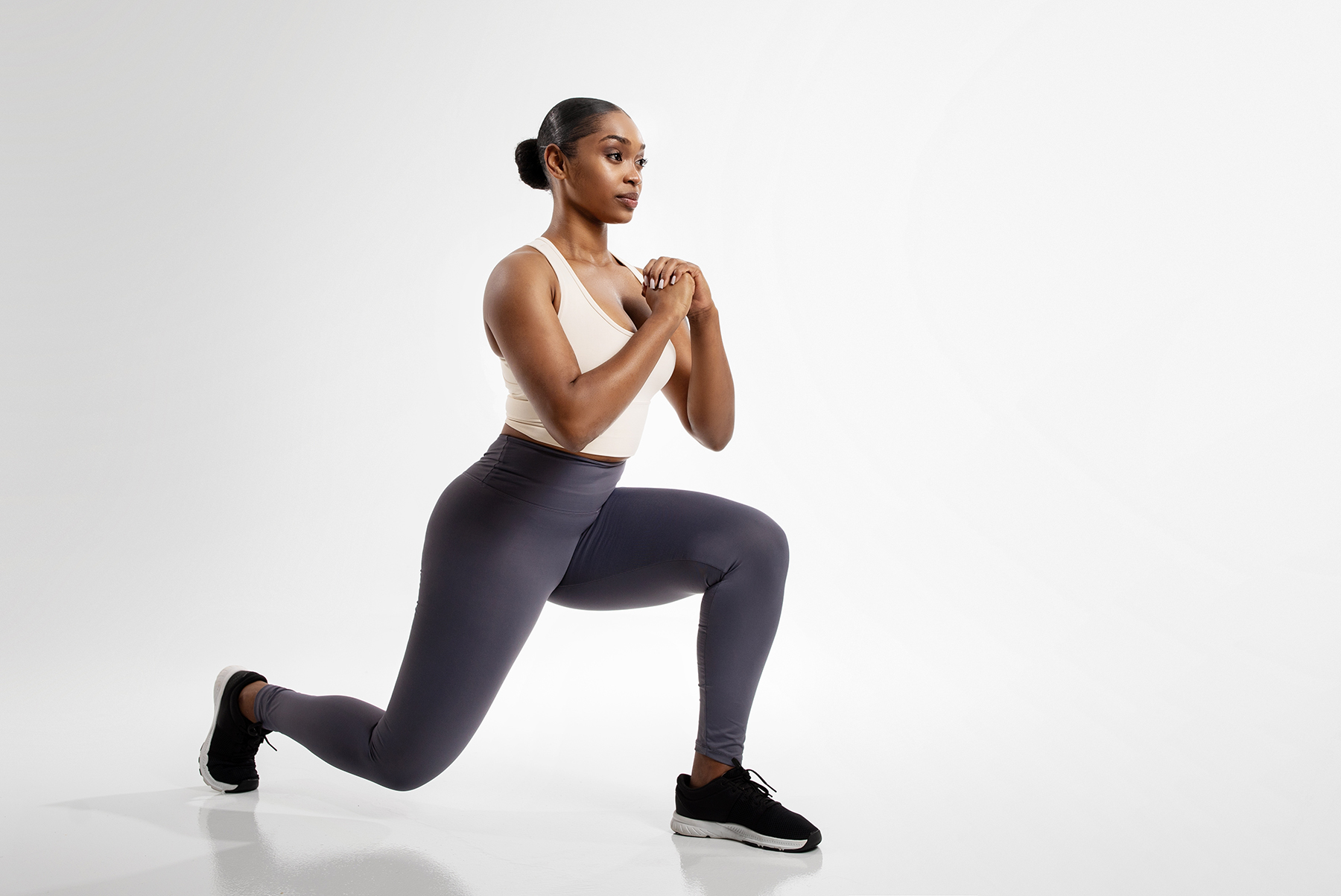
Reverse Lunge to a Small Hop
This lower-body movement, a favorite in Clayton’s plyometric toolkit, isn’t overly challenging — but that’s intentional.
“To be considered ‘true’ plyometrics, a movement has to include a rapid, explosive transition from landing to take off,” she explains. “But I recommend starting with more accessible versions first, like this one, and building toward more powerful, faster variations if and when you feel ready.”
The result is a movement that builds single-length strength, balance, and coordination while keeping overall impact manageable, making it a great entry point into plyometric training.
How To Do It: Step back into a controlled lunge, lowering your hips toward the floor until your front thigh is parallel to the floor and your back knee hovers just above the ground.
From there, press through your front foot and extend your knee and hips with enough power to create a small hop at the top.
Land softly back into the same lunge position, then lower into the next rep with control.
Complete 5–10 reps with one leg forward, then switch sides.
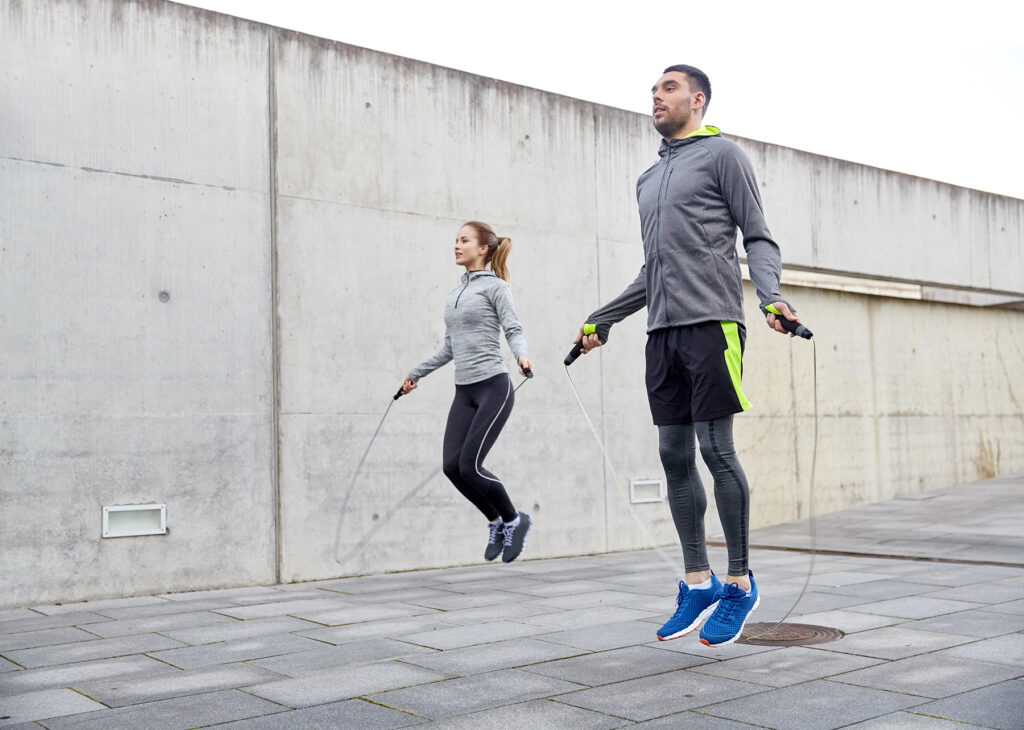
If you’re new to jump rope, or just want to refine your form, our Exercise Library breaks it down step by step so you can move with confidence.
Mini Multidirectional Hops
“I personally prefer the ‘quieter’ versions of plyometrics,” Clayton says. “The results are exactly what I need at this stage — I’m not training for maximum power anymore. I want to stay balanced, pain-free, and build a strong, capable body.”
That’s one reason she returns to this “mini” hop variation. Despite its simplicity, it’s highly effective for improving coordination, ankle strength, and overall confidence in how you move.
How To Do It: Start in a standing, athletic “ready” position with your knees slightly bent, elbows out, hands in front of you, and your gaze forward.
Begin with small, rhythmic hops forward and back for 15–20 seconds. Then transition into small hops side to side for the same amount of time.
Stay light on your feet, keep your movements low to the ground, and focus on landing softly with bent knees and hips.
Medicine Ball One-Leg Lateral Hop
Pressman makes a point to include side-to-side movement in her clients’ routines — something many people tend to overlook.
“I love lateral movements because our bodies are designed to move in all directions, not just forward and back or up and down,” she says.
This variation adds a balance challenge and light load, helping build stability, coordination, and confidence in lateral movement — all of which become increasingly important with age.
How To Do It: Hold a 6–8 lb medicine ball at chest level. Stand with your feet shoulder-width apart and knees slightly bent.
Lift one foot off the ground, balancing on the other leg. Keeping your chest upright and eyes forward, perform a small hop a few inches to one side.
Land softly on the same foot, then hop back in the opposite direction.
Continue for 10–15 reps, or 15–20 seconds, then switch legs.
“When I’m teaching this move, I always say, ‘Take a leap of faith and get to the other side,’” Pressman adds.
Tip: Start with two feet until you feel comfortable with the lateral motion. Then progress to single-leg hops without weight before adding the medicine ball.
Lateral Step-Off
Another lateral movement to try is one of Clayton’s go-to exercises, which introduces a low platform and shifts the focus from jumping to landing.
Instead of emphasizing speed or height, this variation highlights control — especially during the descent.
“It helps train control and your ability to absorb force safely,” Clayton explains.
That makes it a powerful (and approachable) way to build strength, stability, and confidence before progressing to more dynamic plyometric movements.
How To Do It: Stand on a low, sturdy platform (about shin height or lower) with both feet planted.
Lift your right foot and step off to the side, lowering yourself toward the floor. As your right foot lands, bend your knee and hips slightly to absorb the impact with control. Your left foot remains on the platform.
Pause briefly in the lowered position, then press through your right foot to return to standing on the platform.
Repeat for 8–10 reps, then switch sides — or alternate legs each rep.
Progression: This controlled step-off is effective on its own, but it also builds the foundation for more dynamic lateral plyometrics.
As you gain confidence, you can progress to a lateral jump variation — stepping or hopping off the platform with both feet and quickly rebounding back up. Focus on soft, controlled landings before adding speed or height.
Snap-Down to Calf Raise
“I recommend properly scaled plyometric exercises for clients over 40 because we naturally lose fast-twitch muscle fibers as we age,” Kozma explains. “That affects balance, reaction time, and our ability to prevent falls.”
Plyometric training helps preserve those fibers while also supporting bone density, tendon strength, coordination, and overall joint stability.
With that in mind, one of Kozma’s go-to lower-impact options is the snap-down to calf raise, a movement that teaches the body how to absorb force before producing it.
How To Do It: Stand with your feet shoulder-width apart and your hands up in front of you, elbows bent in an athletic “ready” position.
Quickly drop your hips into a quarter squat, keeping your chest lifted and knees tracking forward.
From there, press through your feet to stand tall, continuing the movement into a controlled rise onto your toes. Pause briefly at the top.
Lower your heels, then return to the quarter squat and repeat.
“This teaches the body how to absorb force safely before producing it, which is critical for protecting the knees, hips, and spine,” Kozma says.
Focus on quiet, controlled landings, proper alignment, and stability over speed.
Incline Plyo Push-Up
The benefits Kozma highlighted for lower-body plyometrics apply to the upper body, too.
Plyometric push-ups are a powerful way to build strength and reaction speed across multiple muscle groups — including the chest, shoulders, arms, and even the back for support.
“Incline plyometric push-ups against a bench or wall help build bone strength, shoulder stability, and reaction speed without excessive joint strain,” he says.
How To Do It: If you’re new to this movement, start with a wall. As you build strength and confidence, you can progress to a bench.
Stand just beyond arm’s reach from the wall and place your hands slightly wider than shoulder-width apart. Keep your body in a straight line from head to heels, with a slight forward lean.
Bend your elbows to lower your chest toward the wall, keeping your core engaged.
Then press back forcefully, generating enough power for your hands to briefly lift off the surface.
Land softly with bent elbows, absorbing the impact, and move straight into the next rep.
Complete 5–10 reps.
Jumping Rope
You may not immediately think of jump rope as a plyometric exercise, but it absolutely is.
“Jumping rope improves balance and coordination, and it’s a quick, effective way to boost energy while helping to de-stress the mind,” Pressman says. “I’ve taught almost all of my clients how to jump rope. No matter their age — even if they’ve never done it before — low-impact jump rope, when done with proper form, can actually help reduce discomfort and build confidence.”
Simple, rhythmic, and highly effective, jump rope is one of the most accessible ways to introduce plyometric training into your routine.
How To Do It: Start with basic, low, controlled jumps — no need for anything fancy.
Begin with 5 minutes per session, 3–4 days per week, and gradually build up to 10–15 minutes over time.
You can use it as a warm-up, a quick conditioning block, or even a cool-down.
Focus on finding a steady rhythm, staying light on your feet, and taking breaks as needed as your stamina improves.
Plyometric Parameters
Some of these movements are more challenging than others, but the goal isn’t to master them all at once, but to build confidence over time.
If you give yourself a gradual learning curve and avoid pushing too hard, too soon, you’ll start to feel more capable and controlled with each session.
“The biggest risk with plyometrics isn’t the exercises themselves, but progressing too aggressively or using poor mechanics,” Kozma says. “People should avoid stiff, heavy landings, letting the knees collapse inward, or trying to jump too high too soon.”
Instead, focus on quality.
“Plyometrics should feel crisp and controlled — not exhausting,” he adds. “Even gentle plyometric exercises can dramatically improve balance, bone health, and long-term resilience.”
And over time, that translates into something bigger: the strength, stability, and confidence to keep moving well — and independently — for years to come.
Train Smarter. Move Better.
Stay Strong.
Plyometrics are just one piece of the bigger picture.
With My Peak Challenge, you’ll get structured programs designed to improve strength, mobility, and confidence — with options for every level and every stage of life.