
By Katy Loren
Foam rollers look weird, but they can work wonders for sore muscles. Have you ever wondered how to actually use one to feel better?
“Think of foam rolling like getting a massage,” says Gretchen Zelek, owner of Go Gretch in Los Angeles and AFAA-certified group fitness instructor. “It does much more than stretch a muscle. The pressure you apply with the roller improves circulation by promoting blood flow and helps to relax your muscles. That can increase your range of motion, improve flexibility, reduce muscle soreness after working out, and provide better joint movement.”
With that in mind, here are some foam-rolling faves, courtesy of Zelek and certified OLY and ISSA-CPT fitness trainer Samantha Clayton, owner of Samantha Clayton Fitness in Los Angeles.
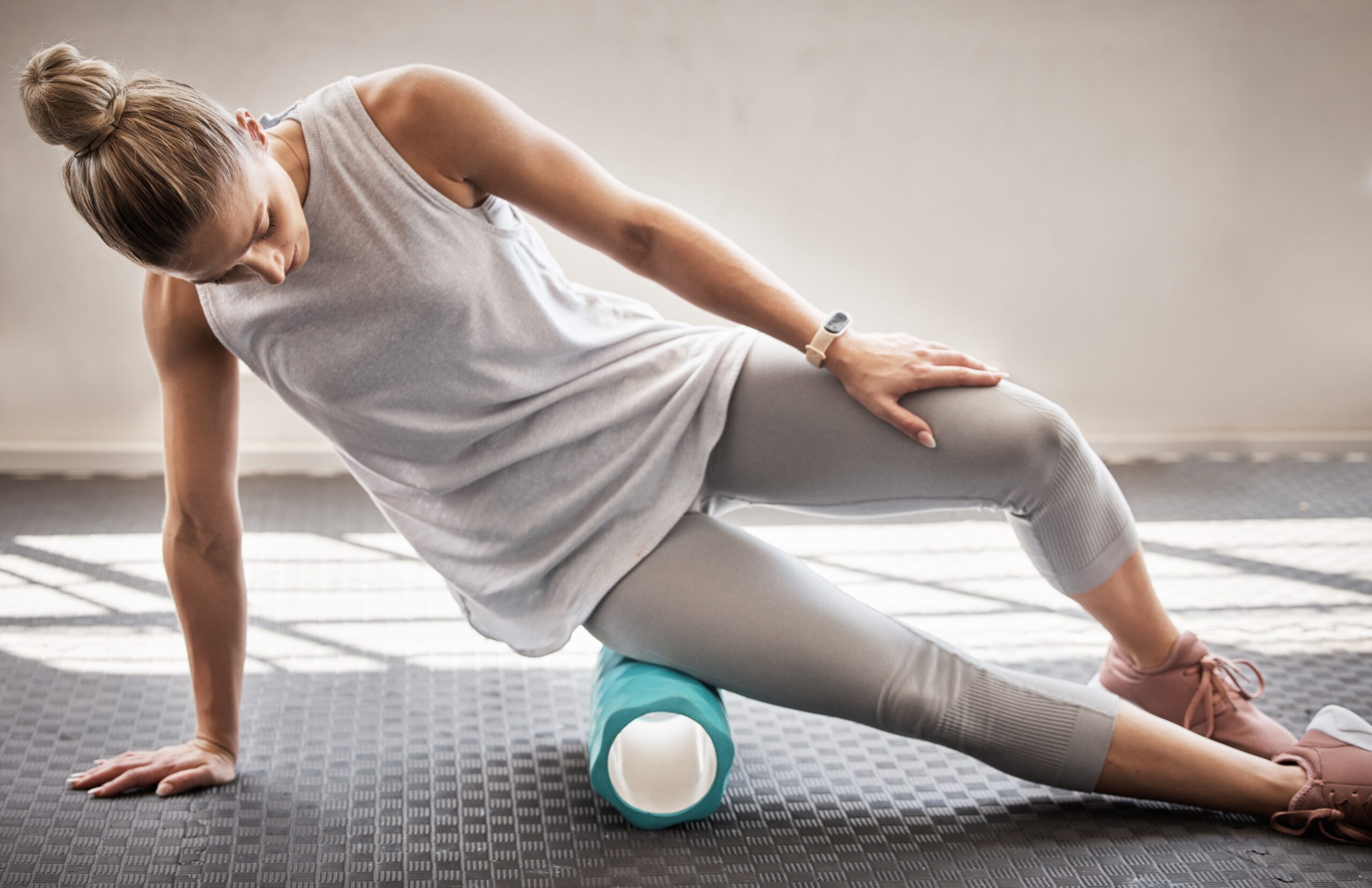
1. Lat Roll

“Rolling on my lats is my favorite foam roller stretch,” Zelek says. “Sitting for extended amounts of time, especially in front of a computer, can create problems for many parts of your body, from your neck to your hips. Your lats are the largest muscle in your back, so you must roll them.”
How-To:
• On your right side, place the foam roller under your armpit with your right arm in front and right leg straight behind you and in contact with the floor from your hip to your heel.
• Use your left hand for support on the floor, and bend your left leg with your left foot on the floor behind you.
• Lift your hip slightly off the floor and roll slowly and gently, almost in a rocking motion, from your armpit down your body to about the mid-to-end area of your ribcage.
• If a certain area feels tight, continue to roll that spot for a few seconds.
• After one to two minutes of rolling one side, switch so your left side is down and repeat the sequence.
Related: Recovery Techniques
2. Flat-Back Roll
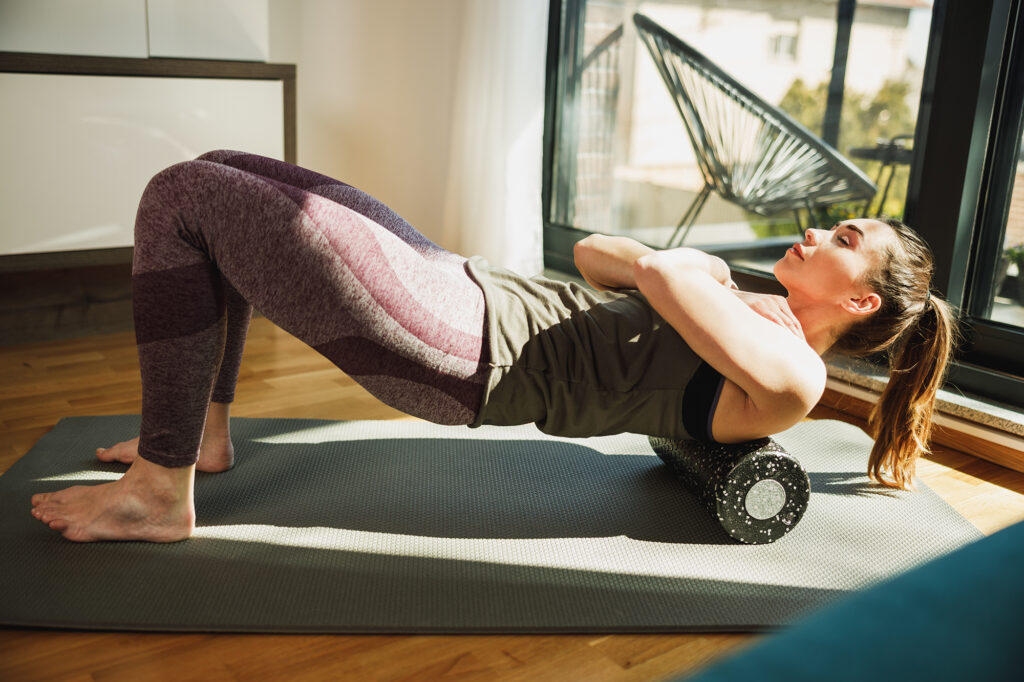
“My favorite upper-body foam rolling area is the upper back,” Clayton says. People often sit in a hunched position on computers, so focusing on the area with a roller relieves built-up tension, increases flexibility throughout the area, and helps you develop a better posture over time.
How-To:
• Lie face-up with your mid-back crossways on the roller, arms crossed on your chest.
• Place your feet on the floor, about hip-width apart, knees bent to 90 degrees.
• Lift your glutes so your body forms a bridge, with your torso and thighs aligned in the same plane.
• Using your legs to help move your body, roll slowly downward until the roller hits the top of the glutes, then reverse and roll all the way up, past your mid-back up to your shoulders and neck area.
3. Chest Opener
“There are few exercises on a roll that feel as great as a chest opener,” Zelek admits. “It opens up your chest and relaxes your spine. Do this move after sitting at a desk, working on your phone, or driving, as it helps your posture and relieves a tight neck and shoulders.”
How-To:
• Carefully lie face-up and longways on the roller to align right down the center of your back, with your head, neck, upper back, and glutes supported on the roller.
• Your knees should be bent, and your heels on the floor for balance.
• Relax your torso to allow your shoulders to shift back so that you feel a stretch across your chest.
• Now, slowly extend your arms straight out to your sides so your body forms a small “T,” which will further open up your chest.
• If that stretch feels like too much, you can bend your elbows to 90 degrees and lower them toward the floor as far as you can.
• Throughout this stretch, do not arch your back or hang your head backward over the end of the roller.
• To start, try holding the stretch for 30 seconds; gradually work your way up to a minute or two.
Related: 6 Things to Do After a Workout
4. Quad Roll
“Rolling on your quads can help facilitate healing and recovery in your knees, thighs, and hips,” Zelek explains. “It hurts so good because there is a lot going on in that particular muscle. The quad is made up of four components that attach to your knee to help you move, walk, and jump, so it tends to be very muscular and dense.”
How-To:
• Lie face down, arms bent with forearms on the floor.
• Place a foam roller on your upper thigh, close to your hips.
• Slowly roll up and down on your quadriceps from the top of your thighs to just above your knees.
• Remember to take long, deep breaths while rolling — it’s important you do not hold your breath and to do the movement slowly to get the full effects.
5. IT Band Roll
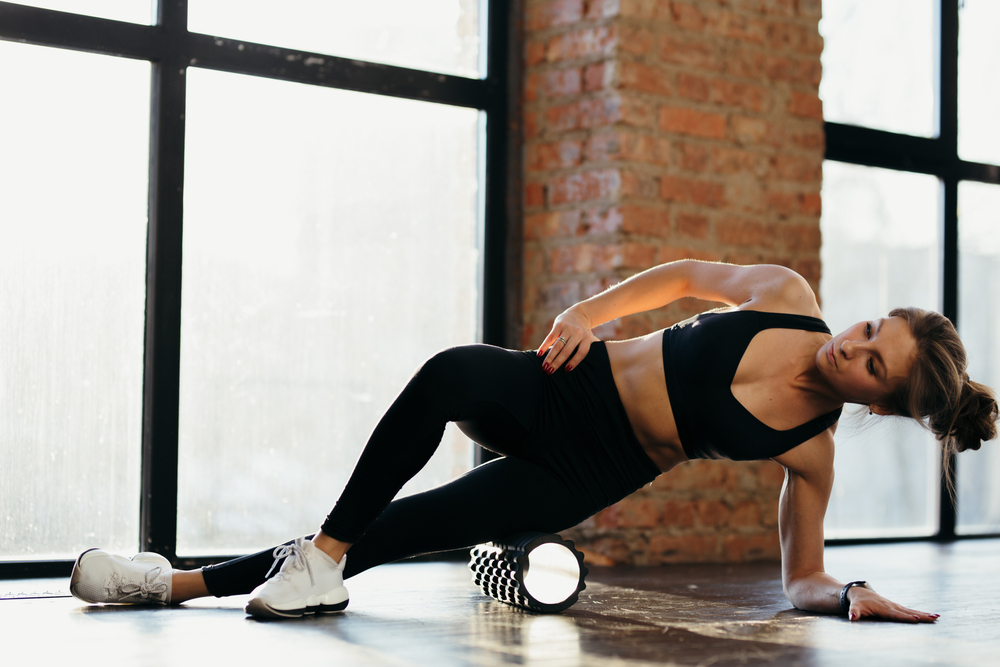
“Foam rolling is fantastic for improving blood flow and mobility,” Clayton says. It’s a perfect addition to both a pre- and post-workout routine. This move hits the iliotibial (IT) band, which runs along the side of your upper thigh. It’s notoriously tight because it’s tricky to stretch with or without a roller.”
How-To:
• Get in position on your side with the roller at the middle of your outer thigh, balancing on one forearm with that elbow bent. Your legs should be straight with the side of the lower foot in contact with the floor.
• Start by rolling slowly down your leg to a point just above the knee.
• Reverse direction, rolling up the outside of your thigh until you reach your hip.
• Roll back and forth for 1-2 minutes, switch sides, and repeat on the other leg.