

By Katy Loren
Hopefully, by now, you’ve become acquainted with the barbell deadlift. And even if you’re not BFFs with what is an admittedly challenging movement — there’s a reason it’s part of the powerlifting competition trifecta, along with the bench press and squat — even an occasional deadlifting session can deliver a lot of great benefits to young and old alike.
We told you all about those benefits in a previous post, but now, we’d like to introduce you to a few great exercises that are closely related to the deadlift, and arguably just as effective (and, dare we say, sometimes enjoyable?). The following three moves are born of the same general principles, but each incorporates some important tweaks that affect your muscles a little differently. Who knows, you may find that you like one or two of these better than the original.
So, let’s take a closer look at the Backpack Sumo Deadlift, Single-Leg Deadlift, and Staggered-Stance Kettlebell Deadlift.
Backpack Sumo Deadlift
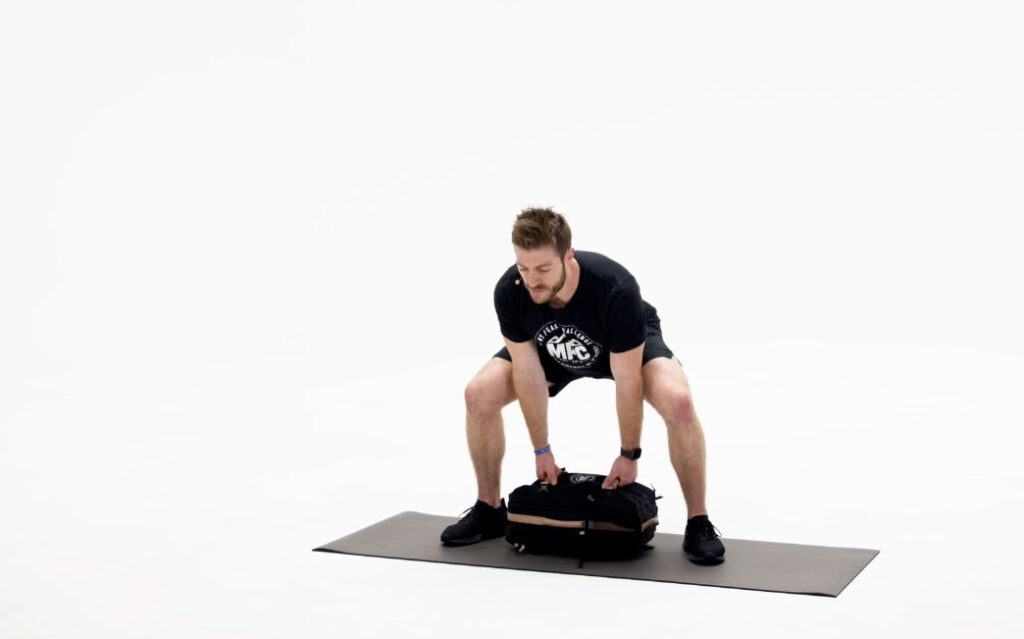
The Backpack Sumo Deadlift switches out the traditional barbell for a real-world alternative — in this case, a backpack, which mimics everyday activities like carrying luggage or lifting grocery bags or other heavy objects. You can fill your backpack with clothes, books, or other items to provide a weight commensurate with your current strength levels.
Muscles worked:
- Quadriceps (front of thigh)
- Hamstrings (back of thigh)
- Glutes
- Latissimus dorsi, trapezius, and erector spinae muscles (the muscles of your back)
- Core, including the abdominals
- Calves
How-To:
1. Assume a stance with your feet wider than shoulder width and toes pointed out, positioning your hips directly over the top of a backpack laid flat on the floor.
2. Keeping your head up and spine straight, bend your knees and drop your hips toward the floor until you can reach down and firmly grasp each side of the backpack (using handles if it has them).
3. Drive through the whole foot and focus on pushing the floor away as you extend your knees and hips to return to a standing position.
4. Ensure the backpack tracks in a straight line upward as you extend the knees and hips.
5. Once you have locked out the hips, reverse the movement by pushing the hips back and bending the knees.
6. Return the pack to the floor, reset without letting go, and repeat for the desired number of repetitions.
Performance tip: The key to the deadlift isn’t brute strength; it’s technique. Think about your hips when you’re doing a rep — they’ll shift backward on the way down, which helps keep your spine in alignment, and they’ll shift forward on the way up. Your hips should be directly aligned with your shoulders in the standing position.
Modify it: If your lower body is especially tight and you can’t comfortably get deep enough to grab the backpack on the floor without bending your lower back, you can place the backpack on its end and grab the top handle with both hands. That way, you don’t have to lower yourself as far down on each rep.
Don’t look down as you lift, because that’ll lead to a chain reaction. Make sure to keep your torso, and abdominals flexed and tight throughout the motion to protect your lower back from injury.
Single-Leg Deadlift
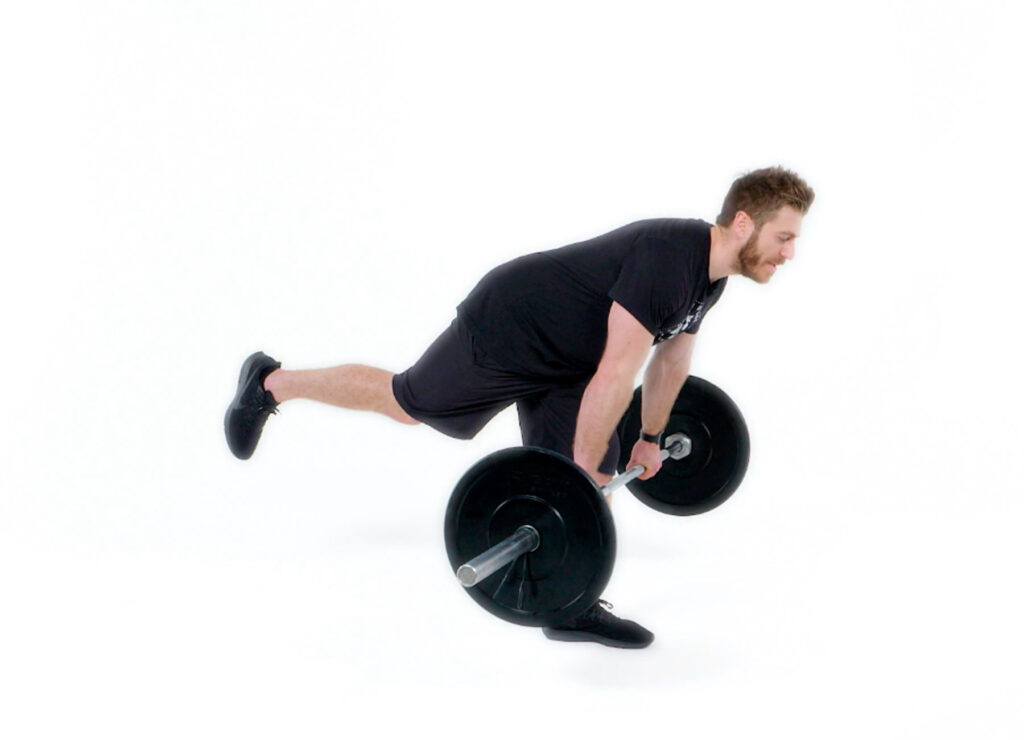
The Single-Leg Deadlift is a fantastic way to build lower body strength and improve your balance. While it emphasizes your glutes and hamstrings like the traditional deadlift, it also challenges your stability and coordination by requiring you to balance on one leg throughout the movement.
Muscles worked:
- Glutes
- Hamstrings
- Latissimus dorsi, trapezius, and erector spinae muscles (the muscles of your back)
- Core, including the abdominals
How-to:
1. You’ll begin this exercise with a standard deadlift: Assume a stance with your feet hip-width apart, the bar positioned over the top of your shoelaces. Keeping your head up and spine straight, bend your knees and drop your hips toward the floor until you can reach down and firmly grasp the barbell with a shoulder-width overhand grip. Focus on pushing the floor away as you extend your knees and hips to reach a standing position. Bring your shoulder blades back and expand your chest outward, flexing your upper body so that it’s stable and rigid.
2. Now, slowly bend forward at the hips, raising your right leg up and out behind you at the same cadence as your upper body — i.e., so your leg and back continue to form a straight line as the barbell slides down the front of your thighs.
3. Stop when your right leg and torso are parallel with the floor — the barbell around knee to mid-shin height or so, depending on the length of your arms — and flex your left glute to bring your body back to a standing position.
4. Finish the desired reps for your left leg (such as 10), then repeat with the same number of reps with the right leg remaining planted on the floor left leg rising behind you.
Performance tip: The lighter you start with this particular exercise, the better, as it requires plenty of balance. You can prepare for the Single-Leg Deadlift by practicing the movement unweighted. This helps you develop balance and coordination before adding any external load. To further enhance your stability, try performing reps on a balance board.
Modify it: This move is challenging with a barbell because the weight is at the front of your body. To learn the motion, try it instead with a pair of dumbbells or kettlebells held at your sides.
Don’t allow your lower back and abs to relax — they must stay tight throughout every rep to protect your spine and surrounding muscles from strain.
Staggered-Stance Kettlebell Deadlift
The Staggered-Stance Kettlebell Deadlift works essentially the same muscle groups as the traditional and backpack deadlift but introduces more elements of balance and body control because of the positioning of the feet and the fact you are only holding weight in one hand.
Muscles worked:
- Glutes
- Quadriceps
- Hamstrings
- Latissimus dorsi, trapezius, and erector spinae muscles (the muscles of your back)
- Core, including the abdominals
- Calves
How-to:
1. Assume a standing position, holding a kettlebell in your right hand.
2. You’ll be working your left leg first, so step back with your right leg, toe up, and on the floor, that heel up. Bend both knees slightly.
3. Keeping your core tight and spine aligned from head to tailbone, lower the kettlebell under control toward the floor by shifting your hips slightly back as you bring your upper body forward and down until the kettlebell touches the floor.
4. Flex through the glutes and hamstrings of your left leg to bring your torso back to an upright position.
5. Complete the desired number of reps for your left leg, then switch positions and repeat with your right leg to complete one full set.
Performance tip: The kettlebell should touch down to the floor right alongside the working leg, aligned with the arch of that foot. If you bring it too far forward, you put undue stress on the lower back during your reps.
Modify it: You can also do this movement with a dumbbell, backpack, or sandbag (preferably with a handle). If you are struggling with having a weight at arm’s length, you might also want to try it while wearing a weighted vest. All of those options accomplish the same goal — engaging your posterior chain of major muscles from the glutes down the back of the leg.
Don’t allow your bodyweight to shift toward the back leg as you bring the kettlebell upward; your center of balance should be over your front, working leg for the best activation of the glutes and hamstrings.
Related: Should You Wear a Weighted Vest?