

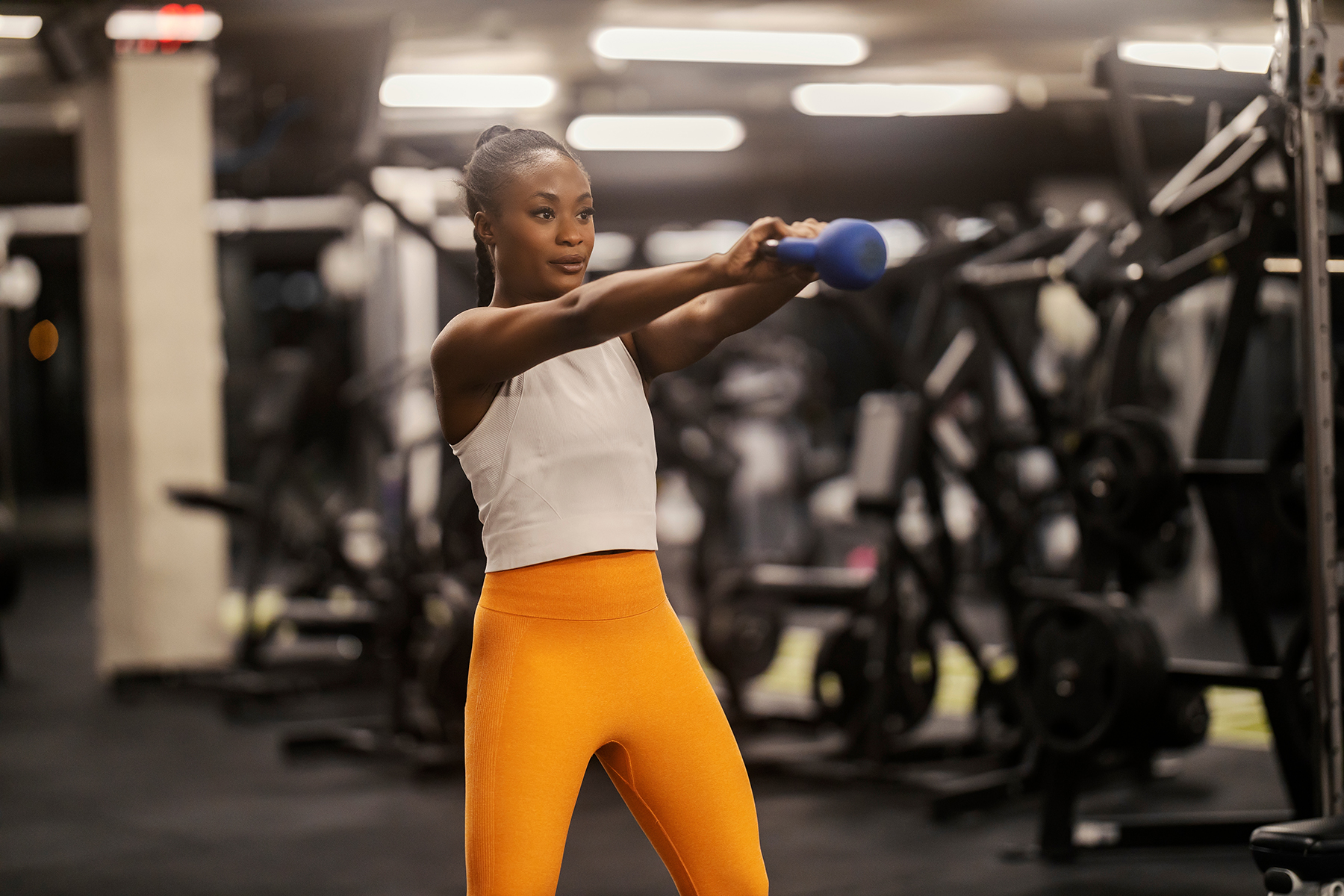
You finish a workout. You’re breathing hard, maybe your legs are a little shaky, and you feel that satisfying kind of tired that only comes from really putting in the work. Then the question hits: “Okay, what’s next?”
It’s a totally natural impulse. There’s something exciting about variety — a new exercise, a new format, a new challenge. And here at MPC, we love that enthusiasm. We’ve built an entire library of workouts and programs for exactly that reason.
But here’s something we want you to hear: going back to a workout you’ve already done isn’t retreating. It’s how progress actually happens.
The Magic Happens in the Return
Think about your favorite song. It didn’t become your favorite the first time you heard it. It got better with repetition. Your brain learned the melody, your body started to feel it, and suddenly it just clicked.
Training works the same way.
The first time you do a workout, you’re mostly just figuring it out — where to put your feet, how to hold your body, when to breathe. Your nervous system is working overtime just to process what’s happening. That’s actually a huge part of why a new workout feels so hard.
When you come back to that same workout, something shifts. The movements start to feel familiar. And that familiarity? That’s your opening to actually push.
What Progress Really Looks Like
Progress in fitness isn’t always a dramatic transformation. Most of the time, it’s quiet and incremental, and it only shows up when you repeat the work. Here’s what to look for when you revisit a workout:
You can lift a little heavier. Even half a pound more than last time is a win. That tiny increase, repeated over weeks, is how real strength is built. Try adding a small amount of weight to any dumbbells or resistance bands you’re using and see how it feels.
You can do more reps. If the workout calls for 10 reps and last time you made it to 8 before needing a break, going back gives you the chance to hit 10 — or even 12. That’s your body getting stronger. That’s the whole point.
You move better. Maybe last time a lunge felt awkward and unsteady. This time, you sink into it with control. That improvement in form isn’t just aesthetic — it means your muscles are working more efficiently, which means better results and fewer injuries over time.
It doesn’t feel as hard. This one surprises people, but it’s a huge sign of progress. If a workout that wrecked you last month now feels manageable, you haven’t gone soft — you’ve gotten fitter. That’s your body adapting, which is exactly what we’re asking it to do.
You recover faster. Woke up less sore the day after? That’s fitness. Your body is learning to handle the demand you’re putting on it.
The Case for Progressive Overload (In Simple Terms)
There’s a principle in fitness called progressive overload, and it’s the foundation of almost every training program, including ours.
The idea is simple: to keep getting stronger, fitter, and more capable, your body needs to be gradually, consistently challenged a little more over time. More weight. More reps. More time under tension. Better form.
The keyword is “gradually.” Jumping to a brand-new workout every single session doesn’t give your body the chance to adapt and improve at any one thing. It’s like trying to learn a language by studying a different one every day.
Our training programs are designed with this principle in mind. When you revisit workouts, you’re not spinning your wheels — you’re completing the loop.
Related: Time Under Tension
How to Use the MPC Library with Fresh Eyes
We have an incredible range of workouts and programs, and we want you to use them all — smartly. Here’s a simple approach:
Finish the program — then do it again. When you reach the end of a program, don’t just move on. Go back to the beginning and run through it a second time. You’ll bring everything you learned in round one — better form, more confidence, a feel for what’s coming — and you’ll be amazed at what you can do differently. That second pass is where the real gains live.
Track something. It doesn’t have to be complicated — even a note on your phone that says “Week 2, added 5 pounds to squats” is enough. Seeing your own progress on paper (or screen) is one of the most motivating things in fitness.
Use revisits to challenge yourself. When a workout starts to feel familiar, that’s your cue to push. Add a rep. Add a little weight. Slow down the movement for more control. Every return to a workout is a new opportunity.
Then explore something new. Once you’ve genuinely progressed through a program, absolutely dig into something fresh from the library. You’ll bring all that hard-earned fitness with you, and you’ll likely surprise yourself with what you can do.
You’ve Already Done the Hard Part
Starting a workout you’ve never done before takes courage. But coming back to one — knowing it’s tough, knowing what’s coming — takes a different kind of commitment. And that commitment is exactly what transforms a fitness routine into a fitness life.
So the next time you finish a session and wonder what’s next, we’d love for you to consider this: what if “next” is doing the same one better?
Go back. Push a little harder. See what your body can do.
You might be surprised.
Ready to revisit a favorite? Head to the MPC library and pick a workout you’ve done before — then make it count.