
By Katy Loren
When a new row of “air” bikes showed up at my gym, I was a little skeptical.
“What’s the point?” I thought. “Don’t we already have enough stationary bikes? We even have a whole Spin studio for that.”
So, I steered clear at first. But then I noticed something: the personal trainers were often using the air bikes for their own workouts. Between clients, they’d hop on and do a quick session.
Eventually, curiosity got the better of me. I decided to tack on a mile to my leg day to see what it was all about. Three minutes and 22 seconds later — legs burning, lungs burning, and the fan blasting a cooling breeze — I got it. I was hooked.
Related: Zone 2 Cardio
Going Rogue
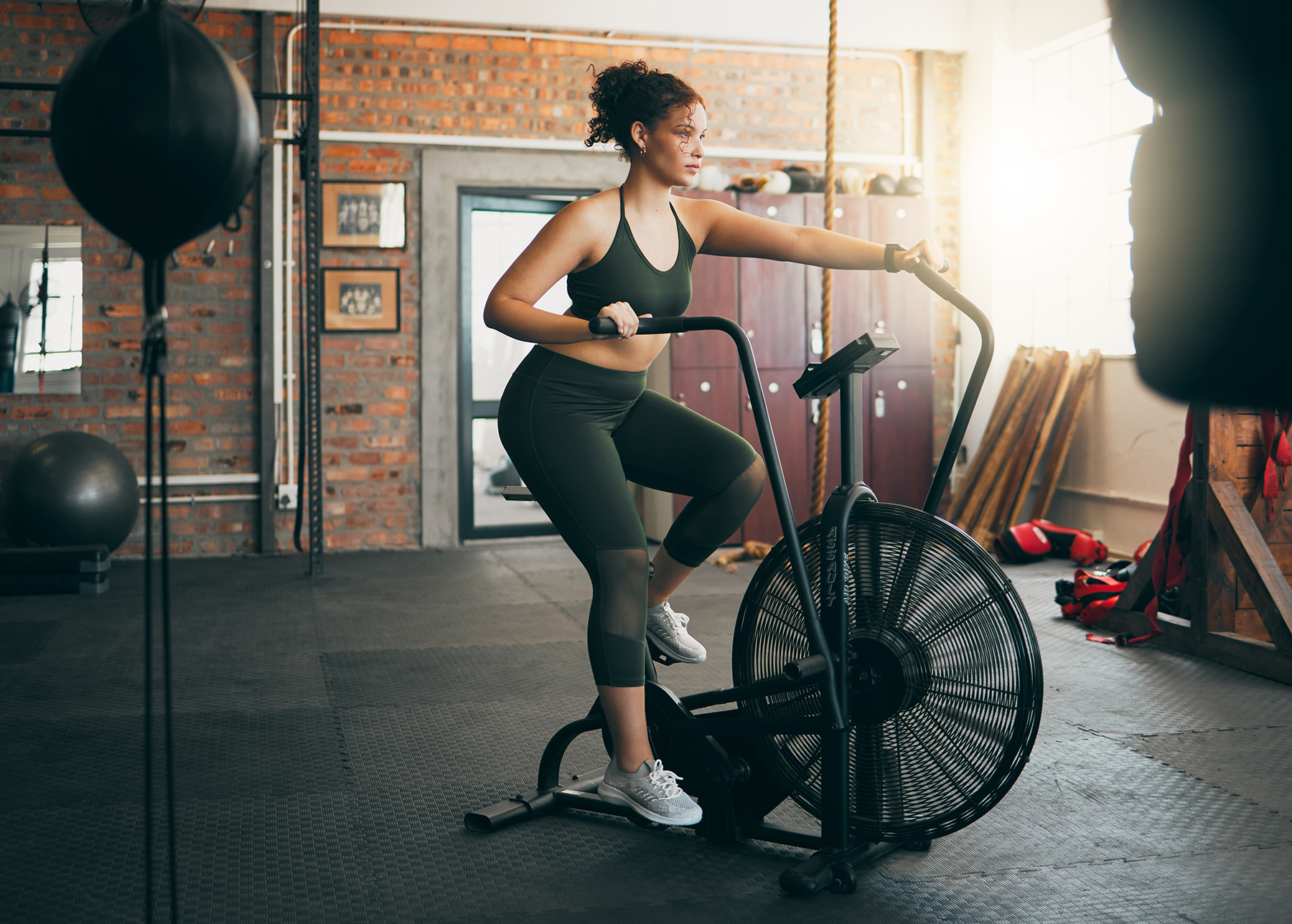
The air bike is a little different from your typical stationary cycle. Instead of using a dial or button to adjust resistance, it relies on a large fan at the front where the wheel would normally be. The harder you pedal (and push or pull the handles), the more resistance those fan blades create. It’s simple, self-powered, and surprisingly effective.
The best aspect? The harder you push, the tougher it gets — because as the fan spins faster, the blades create more wind resistance. “The air bike has the ability to increase your heart rate rapidly and recruit more muscle activity,” explains Los Angeles–based Certified Personal Trainer and Certified Group Fitness Instructor Anita Pressman (Instagram @heartnsolfitness). “The moving handlebars, working in conjunction with the pedals, make it feel like a full-body workout.”
Some of the most popular air bikes come from brands like Assault Fitness, Rogue Fitness, Titan Fitness, Concept2, and the classic cycling staple, Schwinn. The air bike rose to fame partly through CrossFit, where its high-intensity design made it a go-to for conditioning workouts. Today, it’s a favorite tool for circuit and interval training — and for anyone who wants a serious, full-body challenge.
However, they’re not just for big-time athletes and advanced exercisers. “The fan bike is adaptable for all levels of fitness,” Pressman says. “It’s great if you want a slow warm-up, a mid-weight-session dose of cardio, or a full-body workout.” She explains that it engages the legs, arms, shoulders, and chest while remaining low-impact and safe for most trainees.
Pressman sees the air bike as one of her favorite “go-to” tools for women she’s training. “Women must strength train for many health reasons, including increased cardiovascular conditioning, to improve bone density, and to lower their risk of osteoporosis, which I see as a main purpose of including the handlebar action,” she says. “Some days, my clients will warm up or cool down on the bike, but other days it could be their whole workout.”
Related: The Best Treadmill Workouts for Year-Round Training
The Whole-Body Air Blast
To give you an idea of how one could integrate the air bike into a traditional workout, Pressman shared a sample 30-minute high-intensity routine that hits the upper and lower body while increasing your heart rate and activating fat-burning mechanisms.
“First, I’d have my client warm up for five minutes pedaling at a slow to moderate pace to gradually get their heart rate up,” she says. Next, they’d run through the following circuit of moves, spending one minute on each:
• Plank (hands or elbows)
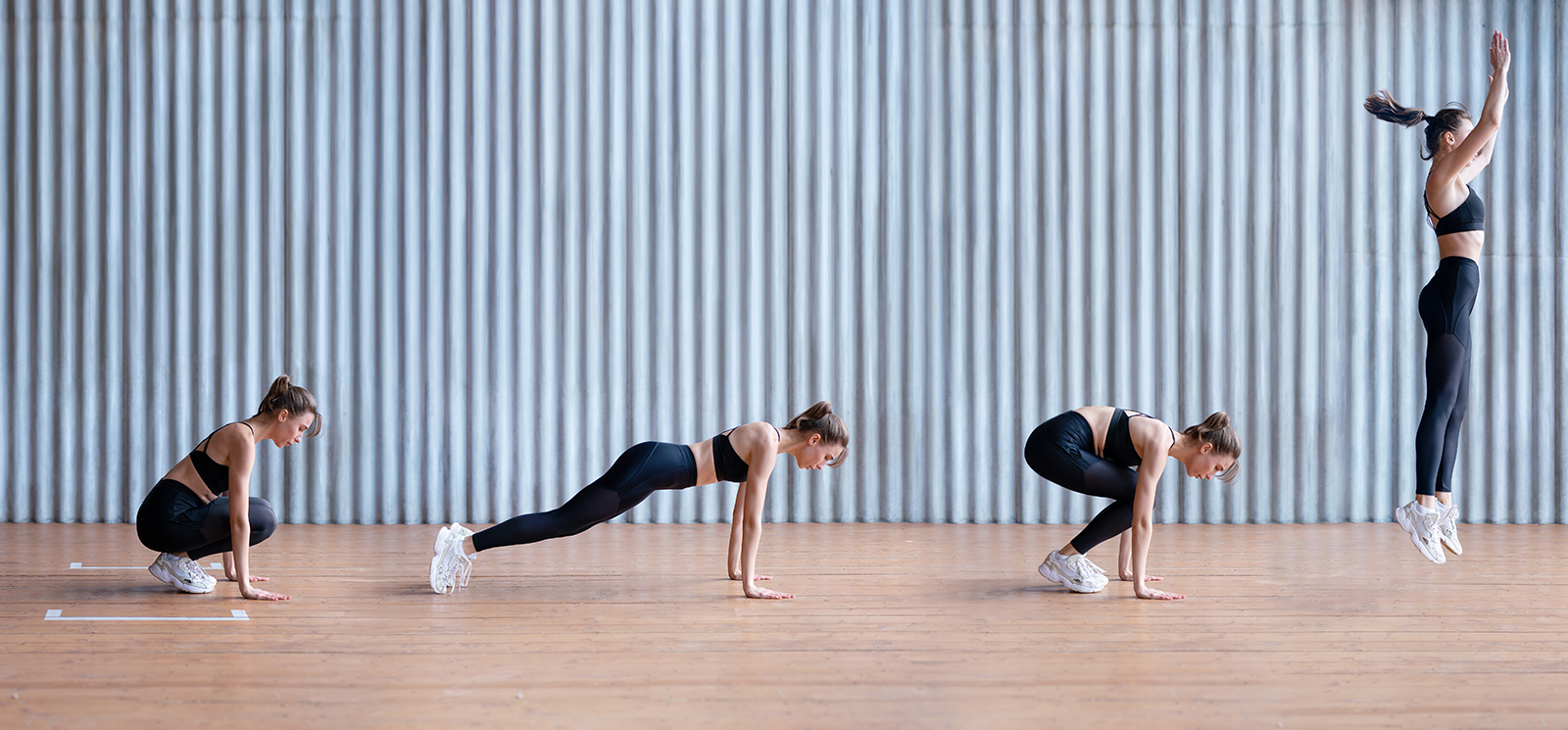
• Burpees (modified if necessary)
• Swiss ball back extension
• Push-up (modified on knees if necessary)
“Next, it’s back on the bike for another five minutes, pushing a little harder than they did during the warm-up,” Pressman says. The next round of moves, each again for one minute, are:
• Plank (hands or elbows)
• Wall sit
• Bird dog (30 seconds per side, right arm and left leg extended, then left arm and right leg extended)
After bird dogs, hop back on the bike for a slower-paced five-minute pedal, followed by this five-minute cooldown of stretching and yoga, one minute per move:
• Butterfly stretch (focus on opening the hips)
• Cat-cow stretch (for a healthy spine)
• Ankle rotations (30 seconds per foot)
• Lying windshield wipers (moving legs from one side, then the other)
• Hold knees to chest
Riding on Air
Of course, you don’t have to build a whole weight workout around the air bike. There are many ways to use it, as much or as little as you’d like. Perhaps it’s a superset where you switch off between 30 seconds of a bodyweight movement next to the bike — squats, burpees, crunches, push-ups, you name it — and a 30-second pedaling sprint.
Or use it as you would a traditional cycle, doing, say, 20 minutes of high-intensity interval training, or a 30-to-45-minute steady state pedal. “Personally, I love getting on the fan bike for 45 minutes after I’m done weight training,” Pressman says. “I feel wonderful knowing I’ve done something great for my physical and mental health while dripping in sweat.”
In other words, you’re only limited by your imagination . . . and any lingering hesitation to give something new a try.
Turn Effort Into Strength
Push harder, breathe deeper, and discover what you’re capable of. My Peak Challenge gives you the structure, workouts, and support to help you build real strength — for life.