
It’s no secret that as we get older, our muscles lose some of their strength. Aging affects the whole body, and without regular strength training, the loss of muscle and strength can eventually make everything from carrying groceries to getting up from the floor more difficult.
But there’s one surprisingly simple measure that can tell us quite a bit about our overall strength and physical function: grip strength. Researchers have even gone so far as to call grip strength an “indispensable biomarker for older adults.”
Grip strength typically peaks around age 40 and starts to decline after that. But your grip tells us about more than the strength of your hands. Because grip strength tends to reflect overall muscular strength and physical function, researchers increasingly use it as one window into how well we’re aging.
In fact, a 2025 review of biomarkers of aging highlighted grip strength as a simple physiological measure associated with future health outcomes, including frailty, cardiovascular and brain health, bone mineral density, quality of life, falls, and mortality.
That doesn’t mean having a stronger grip causes you to live longer or prevents disease. Instead, grip strength appears to be a useful marker of something bigger: how well we’re maintaining muscle strength and physical function as we age.
Why Grip Strength Is Important
Think about how often you use your hands throughout the day. You open jars and doors, carry grocery bags, pick up children or grandchildren, hold a leash, work in the garden, and grip weights during a workout.
Maintaining the strength to do those things comfortably is an important part of staying capable and independent as we age.
Grip strength may also offer clues about overall health. A 2015 study involving nearly 140,000 adults in 17 countries found that weaker grip strength was associated with a higher risk of cardiovascular events and death.
More recently, researchers have continued to find associations between grip strength and other aspects of health. A 2022 study involving more than 40,000 participants found that stronger grip strength was associated with better cognitive performance, greater well-being, and fewer symptoms of depression and anxiety.
Again, these associations don’t mean that squeezing a tennis ball will improve your heart health or prevent cognitive decline. Grip strength may be valuable precisely because it gives us an easy way to measure one piece of our overall physical health.
And that’s an important distinction: The goal isn’t simply to build stronger hands. It’s to maintain the strength and function that allow you to keep doing the things you want and need to do.
Why Does Grip Strength Decline?
Your dominant hand will often have a stronger grip because you use it more. But like strength elsewhere in the body, grip strength tends to decline with age, particularly when we lose muscle mass and don’t regularly challenge our muscles.
Inactivity can contribute, as can injuries and conditions affecting the hands, wrists, arms, or nervous system. Arthritis, carpal tunnel syndrome, tendon injuries, and some neurological conditions can also affect grip strength.
If you notice a sudden or significant change in your grip, particularly weakness in one hand or weakness accompanied by pain, numbness, or tingling, talk to your healthcare provider rather than assuming it’s simply a normal part of aging.
How Strong Is Your Grip?
In research and healthcare settings, grip strength is usually measured with a device called a hand dynamometer. You squeeze the device as hard as you can, and it measures the amount of force you produce.
Unless your healthcare provider is monitoring your grip strength, however, you probably don’t need to know your exact number. Instead, pay attention to what your hands allow you to do.
Are grocery bags becoming harder to carry? Do you struggle to open containers you once opened easily? Does your grip give out before the rest of your body when you’re holding dumbbells or doing a deadlift?
These aren’t formal grip-strength tests, but changes in everyday function can be a useful reminder to pay attention to your overall strength.
How to Improve Grip Strength
Here’s the good news: You may already be training your grip without realizing it.
Functional strength exercises such as deadlifts, rows, goblet squats, kettlebell exercises, and carries require your hands and forearms to hold onto resistance while larger muscle groups do the work.
And there’s evidence that resistance training can improve grip strength, particularly in older adults. A 2025 systematic review and meta-analysis found that resistance training improved handgrip strength in older adults with sarcopenia.
In other words, you don’t necessarily need an elaborate grip-training routine. Continuing to challenge your muscles through regular resistance training is a great place to start.
You can also add exercises that specifically challenge different aspects of your grip.
Related: 5 Ways to Increase Upper-Body Strength
Grip Strength Exercises
Grip isn’t just one thing. Different activities challenge your hands and forearms in different ways. These exercises can help you work several types of grip strength.
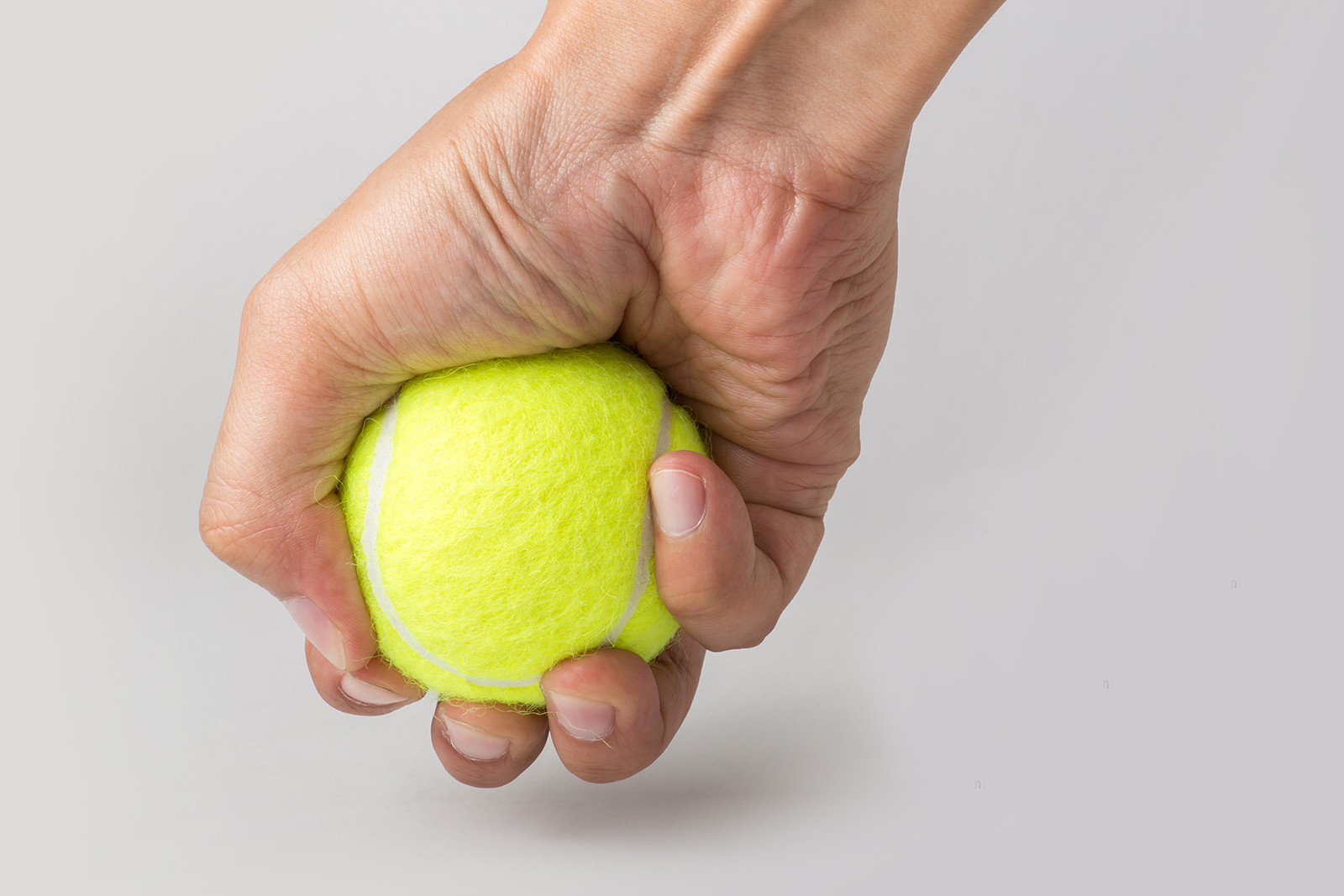
Tennis Ball Squeeze
This exercise trains your crush grip — the strength you use when squeezing something in your hand.
Hold a tennis ball or stress ball in one hand. Squeeze it firmly, without causing pain, hold briefly, then release.
Repeat 8 to 12 times before switching hands. Start with one or two sets and increase gradually as your hands get stronger.
Plate Pinch
A plate pinch challenges your pinch grip, which involves your fingers and thumb.
Begin by standing with a light weight plate at your side. Pinch the plate between your four fingers on one side and your thumb on the other.
Stand tall and hold the plate for 10–20 seconds, then carefully set it down.
Repeat two or three times on each side. As your grip improves, gradually increase the time or weight rather than immediately jumping to a much heavier plate.
Farmer’s Carry
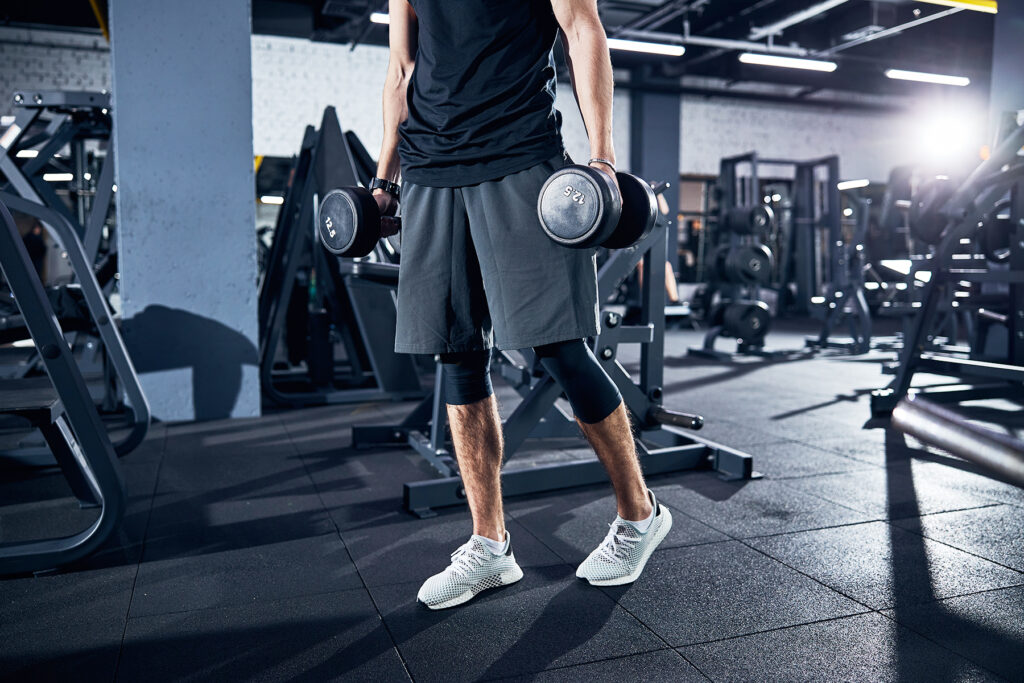
The farmer’s carry or farmer’s walk is one of the simplest ways to train your support grip—the ability to hold onto something for an extended period. It also challenges your shoulders, core, and lower body.
Grab a pair of dumbbells or kettlebells that you can hold securely while maintaining good posture. Stand tall with your shoulders, back, and core engaged, then walk while holding the weights at your sides.
Start with a distance or amount of time you can comfortably manage while maintaining control. As your strength improves, gradually increase the weight, distance, or time.
Learn the Moves
Want to perfect your Farmer’s Carry, or learn another exercise in your MPC workout? Visit the Exercise Library for step-by-step video demonstrations designed to help you learn proper form, move with confidence, and get more from every workout.
Dead Hang
The dead hang challenges grip endurance while also involving the shoulders and upper body.
Position yourself under a pull-up bar and grasp the bar with your hands slightly wider than shoulder-width apart.
If a full dead hang is appropriate for you, hang with your arms extended for as long as you can comfortably maintain good form. You can also keep your feet on the floor or on a box to reduce the amount of body weight you’re supporting.
Dead hangs aren’t appropriate for everyone, particularly if you have certain shoulder, elbow, wrist, or hand issues. Choose another grip exercise if hanging causes pain or discomfort.
Hold On to Your Strength
Grip strength gets a lot of attention because it’s easy to measure and can tell researchers quite a bit about our overall strength and health. But the number itself isn’t really the point.
What matters is what that strength allows you to do.
A strong grip helps you carry the groceries, lift a suitcase, open a stubborn jar, hold a dumbbell, work in the garden, and keep doing countless other things that are easy to take for granted—until they become difficult.
That’s one more reason to keep strength training as you get older. We’re not simply building muscle for today’s workout. We’re building the strength and capability we want to carry with us for years to come.