

By Katy Loren
We’ve all probably made the mistake at some point in our lives of doing a lot when just a little would have been just fine.
Maybe it was signing up for an ultramarathon on a high of motivation, then realizing mid-training that your longest run to date was 5K. Or quitting your gym in a dramatic farewell to “toxic grind culture,” only to miss the squat rack three weeks later. Or maybe you impulse-bought an entire supplement stack promising peak performance… and now your kitchen looks like a science lab.
Or maybe you’ve daydreamed about selling everything, moving to a remote mountain village, and starting a goat cheese business — despite having zero experience with goats…or cheese. Sometimes the impulse to burn it all down and start fresh feels oddly appealing, especially when you’re exhausted or stuck in a rut.
But here’s the thing: big change doesn’t always require a grand gesture. Most of the time, what actually helps isn’t a dramatic reinvention — it’s one small, intentional shift. Something you can stick with. Something that builds momentum. Something that feels good and doable.
Take your workouts, for instance. You might be a little tired of your routine, a bit bored by the same exercises day after day. Some people might advise you to revamp everything in favor of a new approach. (Heck, we kinda did!) But before you get too aggressive, consider a few tweaks to freshen things up.
“I’ve experienced burnout many times throughout my own fitness journey,” says Darlene Kalina Salvador, a Southern California–based yoga instructor, personal trainer, and outdoor enthusiast. “It’s not a failure, but rather a signal — a green light to pause, reassess, and try something different. And often, the best thing you can do is shake things up and move your body in a new way.”
Here are six tweaks to liven up your training — without going to the extreme.
1. Discover the great outdoors.
“I won’t lie — the gym fires me up,” Salvador admits. ”It’s where I challenge my strength and push my limits. But nature brings me back down in the best way. It grounds me, clears my head, and reminds me to slow down and breathe. I need both to feel balanced.”
Training outside isn’t just about a change of scenery, but delivers tangible benefits as well. “I’ve found that spending time outdoors lifts my mood, reduces stress, and improves sleep,” she says. ”The sun provides a natural dose of vitamin D, supporting bone health, boosting immunity, and fueling energy. Moving barefoot in the grass or sand reduces tension, improves circulation, and creates a deeper sense of calm. These small shifts in my routine have made a big difference in how I feel, both physically and mentally.”
Salvador offers up two ideas to turn your workouts inside out:
- Yoga on the Beach: “The ocean breeze reminds me to breathe deeper, and the sound of the waves adds a sense of calmness. The shifting sand underfoot forces my body to engage muscles in ways I don’t experience indoors, making each flow feel more intentional and challenging.”
- Circuit Training in the Park: “A smooth, even rock makes the perfect step-up platform, while a sturdy log is great for push-ups. I love holding planks, feeling the earth beneath my hands and feet, grounding myself. And sometimes, I hang from a tree, which is great for shoulder mobility and grip strength… plus it’s a fun way to tap into my primal side.”
2. Get functional.
In the typical weight workout at a gym, we do movements that are designed to hit a particular body part — we’ll do flyes or bench presses for our chest, leg extensions and curls for your thighs, and curls and extensions for our arms. While all those are great exercises, they all share something in common: That is, they aren’t directly transferable to activities you do in the course of your daily life.
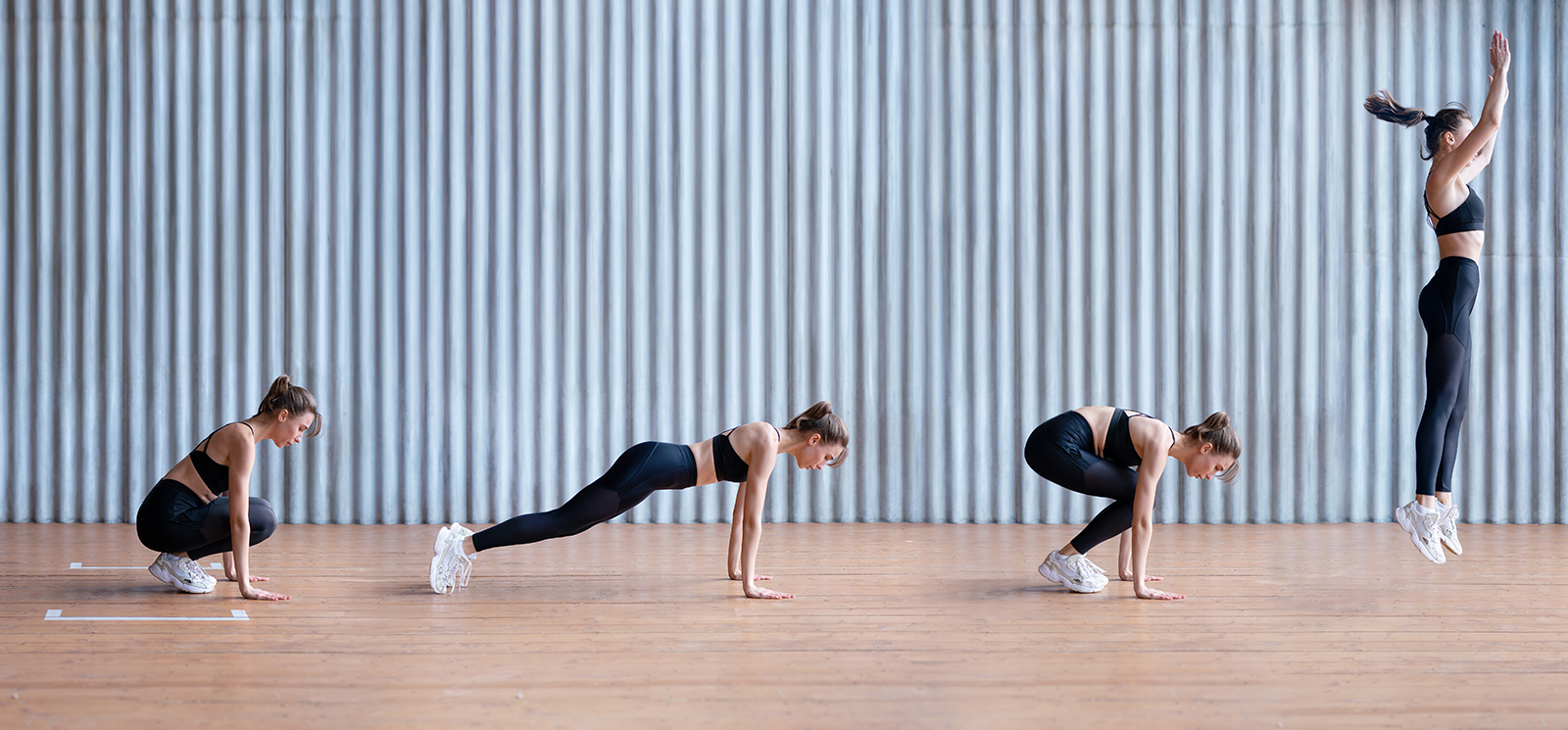
A functional movement, on the other hand, is designed around things we tend to naturally do. A squat is a perfect example, especially a box squat, which mimics getting ourselves up from a seated position. Or consider a deadlift, which is simply picking up an item from the floor (and how many million times a day do we all do that?). Push-ups and burpees help us get off the floor, whether we’re a volleyball player who just did a point-saving dive or a mom on all fours coaxing her baby to crawl. And step-ups and lunges will translate directly to your ability to climb a few flights of stairs without getting winded.
Trading out a few of your well-worn exercises in your current routine for some functional alternatives might be just the change-up you’re looking for.
3. Ask, “What’s that?”
We all tend to have our faves at the gym. It could be dumbbells, kettlebells, a Smith machine, or a trusty cable station. We’ll use the same implements and machines time and again, and lean on our go-tos because that’s where we’re most comfortable. It can make some sense to stick with what has worked for you if it’s leading to closer to your goals…but what if, instead, it’s steered you right into an unproductive rut?
“When your body feels stuck or stagnant, sometimes it’s not about doing less, but doing something different,” Salvador says. ”If you’re burned out, my number one piece of advice is to find a new way to move your body. Surprise your muscles, and your mind.”
For instance, Salvador, who tends to stick to traditional weights at the gym, took a left turn. “Recently, I dropped into a Pilates class and wow… I was sore in places I haven’t felt in years. That unfamiliar movement woke something up in me. It reminded me that progress doesn’t only come from lifting heavier, or adjusting sets and reps. Progress can come from moving differently.”
If you tend to always gravitate to the treadmill for cardio, try swimming or cycling to engage your body in a new way. Or, if you’ve been doing a circuit of machines as your resistance training, consider dropping into a Barre class or boot camp. And if you’ve come across a new piece of equipment at your health club, ask a trainer to give you a demo, and incorporate it into your next workout.
“One of my clients added a beginner salsa class to her weekly routine,” Salvador says. “After her first class, she told me that it was the most fun she’s had sweating in years, and her abs were sore for two days. Some of my other clients have switched up their weekly workouts with boxing, kayaking, or even hiking trails they’d never tried before. Movement is medicine — and sometimes the dose needs to be adjusted.”
Related: Intermediate Pilates
4. Feel it out.
We’re so conditioned to count everything in our training. How many exercises should you do? How many sets? How many reps? The idea being, if you perform some sort of “magic number” of movements within a given workout, it will automatically bestow benefits.
In reality, though, the body just doesn’t work that way. To break the habit of counting everything and get in better touch with how you and your muscles feel during your session, we’re suggesting you just change one thing in your current workouts: That is, go in and don’t count a single rep.
Instead, you’ll choose a challenging weight (which can be what you handled last time) and then concentrate on the mechanics of doing the exercise correctly, focusing on your breathing — exhaling on the “push” and inhaling on the return — and the feel of your muscles, joints, tendons, and energy levels as you continue the rhythmic action. Simply try to do as many reps as you can, and when your form falters and it becomes impossible to do another rep, stop.
Not counting reps can help re-center your approach to fitness, reminding you what doing exercise is all about in the first place. It’s not about 10 reps here, 15 reps there, it’s about engaging your body to accomplish feats of strength and endurance it hasn’t mastered before. In that way, it must adapt, prompting the beneficial reactions in your body composition and cardiovascular health we’re all chasing.
5. Find your inner yogi.
“Yoga can absolutely be an incredibly effective replacement — or better yet, a powerful complement — to traditional strength training,” says Salvador. “But it’s not just about the poses or flexibility. For me, yoga became essential when I was recovering from an injury and couldn’t train the way I was used to. It gave me a way to move safely, taught me how to listen to my body, move with intention, and stay strong from the inside out.”
You may wonder, does yoga really build the same physical attributes as weight training? Perhaps not exactly, but it’s certainly no slouch when it comes to delivering numerous benefits. “Yoga builds a different kind of strength, the kind that supports your joints, stabilizes your core, and protects you from injury,” Salvador points out. “It works the connective tissues, the deep stabilizers, and the often-overlooked muscles that matter more and more as we age.
“Yoga has carried me through seasons when lifting heavy wasn’t an option,” she adds. “It’s why I can still surf —even if I wipe out more than I ride, snowboard with control, and lift weights with better form and breath. It even helps in everyday moments like picking up groceries, reaching overhead, or getting up from the floor.”
If you’ve never even struck a pose or previously given yoga a second thought, there are easy ways to try it without fear that you can’t keep up. Salvador recommends “slow flow” as a gentle option that’s “perfect for beginners.” Her other three favorite styles are:
- Yin or Restorative: Great for recovery, injury support, and deep flexibility.
- Power or Vinyasa: Builds strength and endurance through dynamic sequences.
- Iyengar: Alignment-based with props; ideal for precision and injury rehab.
Or, you can check out all of the My Peak Challenge yoga offerings by clicking here.
6. Cue the music.
It may be obvious — yes, music is a motivator when it comes to working out. However, it helps to set the right tone. (See what we did there?)
“As a yoga instructor, music has been a powerful tool to support the energy I’m trying to create in a training session,” Salvador explains. “For me personally, when doing lifting or high-energy circuits, I go for energetic EDM and remix tracks that keep my momentum strong — think Kygo, Rufus du Sol, or Purple Disco Machine. Their beats keep me focused and fired up without feeling chaotic.”
For stretching and cooldowns, Salvador gravitates toward more acoustic and mellow sounds — artists like Trevor Hall, East Forest, and DJ Sol Rising. ”These tracks help me transition out of intensity and into calm, perfect for post-workout breathwork or meditation,” she says.
Having said that, there’s something to be said for silence, too, and if you’re always listening to music during your workouts, tuning out might be the perfect way to change things up. “When learning a new skill like refining a lift, trying a new yoga pose, or focusing on alignment, I keep it quiet, no distractions,” Salvador says. “It’s just me, my breath, and the movement. That’s when you really listen inward. I use music to enhance my awareness, not override it.”
Want More Support, Structure and Fresh Ideas?
If you’re ready to refresh more than just your routine, My Peak Challenge is here to help. Our members get access to full training programs, mindset tools, expert-led yoga and recovery sessions, and a global community cheering them on every step of the way.
Join today and start building a routine that actually works for your life.