
By Maureen Farrar
Loneliness touches everyone at some point and when that ache hangs around, it doesn’t just live in our heads. It can disrupt sleep, crank up the stress, weaken immunity, and drain our motivation. Addressing it isn’t a luxury; it’s part of living a healthier, happier life.
That’s why connection belongs on the same basics list as sleep, food, and movement. Yes, it’s that crucial for your health and longevity. “Humans are wired for connection,” says Holly Batchelder, PhD, PMH-C, a clinical psychologist based in Seattle, who specializes in diversity and community mental health. “Strong relationships reduce stress, improve our immune function, and lower risks for depression and anxiety.” In other words, just as nutritious food and regular exercise fuel the body, social connection fuels the mind and nervous system.
This piece is a friendly nudge — and a practical plan. We’ll show you how connection acts like preventive care for your health, then provide you with simple, five-minute habits to build your “social fitness” without overhauling your life.
Loneliness vs. Isolation (and Why the Difference Matters)
If connection is the goal, it helps to name what gets in the way. That starts with understanding the difference between loneliness and isolation. They’re related, but not the same.
Think of loneliness as the feeling of not being close enough to others, and isolation as not having many people around you. Both show up more than we expect — about a third of adults in the U.S. say they feel lonely, which is higher than the levels in their European counterparts 1. If you’ve ever felt surrounded by people and still felt lonely, you already know why this distinction matters.
Many younger folks feel lonelier than ever, while many older adults spend more time alone. That’s because, over time, our friend groups thin, community routines fade, and we trust each other less. Technology can bridge the gap — or widen it — depending on how we use it.
Here’s the bigger picture: loneliness isn’t “just a feeling.” When it sticks around, it starts behaving like a health risk. Chronic loneliness — feeling lonely most of the time or for long stretches—has been linked to higher rates of disease and even earlier death. In fact, one large analysis found that persistent disconnection carries about a 50% higher risk of premature mortality, on par with smoking up to 15 cigarettes a day. 2
And it’s not only about mortality. Long-term loneliness and isolation are tied to higher risks of heart disease (+29%) and stroke (+32%), depression and anxiety, cognitive decline (~+50%), diabetes complications, and even greater susceptibility to infections. 2,3
“When we lack meaningful connection, the body reacts as if we’re under constant threat,” says Dr. Batchelder. This can raise our stress hormones, disrupt our sleep, increase inflammation, and overall weaken our immunity. Over time, this ‘always on’ stress state can wear down our system, making us more vulnerable to serious illness.”
The hopeful part? A lack of social connection is fixable. Connection is a skill you can practice, and like strength training, it gets easier the more you do it. A few minutes a day, plus a supportive crew like MPC, can change your curve. Those tiny check-ins, invites, and thank-yous work like reps: they stack, and your system notices.
How Connection Protects Your Health
When you have people in your corner, your body runs a little quieter. Supportive ties help settle the stress response — think steadier blood pressure, calmer cortisol, and fewer “wired-but-tired” nights — and they can even nudge your immune defenses in the right direction 4.
Your mind benefits too: feeling seen adds meaning and resilience, so the same challenges feel more manageable and you bounce back faster. As Dr. Batchelder notes, loneliness can amplify stress and keep cortisol levels high; connection helps turn the volume down, allowing your mood and sleep to stabilize.
And then there’s behavior. Belonging makes the healthy stuff — sleep, training, meals, meds — easier to stick with because you’re not doing it solo. In short: connection shifts your biology, lifts your mood, and keeps your habits on track.
It’s one reason so many Peakers say the community keeps them consistent. Those benefits matter at any age, but they’re especially powerful in midlife, when roles change and pressure stacks up.
Why Midlife Makes Connection Even More Important
Midlife sits right where a lot of pressure points meet. In the U.S., bigger forces tend to push people apart — more “go-it-alone” norms, frequent moves, weaker family ties, rising income inequality and job insecurity, heavier social media use, shrinking in-person networks, and growing polarization. Add thinner social safety nets (less family leave, childcare, unemployment protection), and the work–family squeeze gets tighter just as you’re carrying a lot for both younger and older generations.
On top of that, your 40s, 50s, and beyond come with personal shifts — caregiving, kids leaving home, job changes, remote work, and menopause — that can quietly shrink your social world right as health risks creep up 5. As Dr. Batchelder puts it, these transitions can raise loneliness by shrinking our circles, while strong support eases symptoms, lowers stress, and improves overall well-being.
The upside: connection is a powerful buffer. When someone’s in your corner, you recover better, train more consistently, sleep more soundly, and feel more motivated. Community puts wind at your back, and it’s one of the few levers you can pull that counters both the day-to-day strain and the bigger cultural headwinds.
Related: How Our Friendships Keep Us Healthy
The MPC Connection Plan
Here’s your nudge: give this a 7-day “social reps” experiment. No overhaul, no big speeches — just 5–10 minutes a day. Stack it onto what you already do: send a check-in while the coffee brews, voice-note between sets, invite a friend for the walk you’re taking anyway. Awkward is normal at first. Short and sincere beats perfect every time.
Treat it like your workout — make a plan, put it on your to-do list, and let the momentum do the rest. Ready? Here’s the plan.
Daily (5–10 minutes)
1 text. 1 thanks. 1 invite.
- Text a buddy or fellow Peaker a sincere check-in.
- Thank a coach, friend, or family member for something specific.
- Invite someone for a short walk, lift, or stretch—today or this week.
- Share one micro-update in the MPC group: a win, a wobble, or an ask.
Weekly
- Walk & Talk Friday (20–30 min). On the phone or in person, movement + conversation = connection.
- Join one session. Whether it’s on a live or replay—greet two members by name and leave one encouraging comment.
Monthly
- Meetup: coffee, hike, garage-gym lift—keep it simple.
- Widen your circle: leave three meaningful comments for members you don’t know yet (“What helped you with that lift?” is more meaningful than “Nice job!”).
Dr. Batchelder advises, “Make one small positive social contact every day.”
If Your Tank Feels Empty
Start gently. Companionable listening (walk while listening to a podcast or playlist that feels like company. Try a one-tap outreach like a single “thinking of you” voice note. Maybe you do a tiny post; just lurk to get the vibe, then add one emoji or a one-line reply. No matter what you choose, remember that small things count. Dr. Batchelder notes that even brief, positive interactions, like a chat with your local barista or a short walk with a neighbor, build confidence.
Tools to Make it Easy
Peak Pod (3–5 people)
Create or join a micro-group. Rotate a “check-in captain” weekly.
- Monday: goals (1 training, 1 life)
- Wednesday: progress ping (2 sentences)
- Friday: wins + one thing you learned
Connection Habit Tracker
Print or screenshot 21 boxes: Text / Thanks / Invite / Share / Walk & Talk. Check one off daily and celebrate streaks.
Conversation starters
- “What felt strong in your last workout?”
- “What’s one tiny thing you’re trying this week?”
- “Want company for a 15-minute walk tomorrow?”
Online community guardrails (so digital helps, not drains)
Dr. Batchelder says, “I’m a big fan of online communities. Online communities like My Peak Challenge can reduce loneliness by offering belonging, shared purpose, and consistent interaction, especially for people with limited in-person options. They work best when they encourage positive, respectful exchanges, focus on shared goals, and prompt offline connection or skill-building rather than endless scrolling or comparison.”
When to Add Professional Support
Community is powerful, but it’s not a replacement for care. If you notice persistent low mood, loss of interest, significant sleep and/or appetite changes, or feelings of hopelessness for two weeks or more, talk with a healthcare professional. Use your community to help you take that step — and to keep you company along the way. For urgent distress in the U.S. or Canada, call or text 988. In the UK, text SHOUT to 85258.
The Bottom Line
Connection isn’t just “nice to have,” it’s one of the most powerful health habits you can build. The science is clear: when we invest in our relationships, stress softens, our bodies recover more fully, and our drive to keep going feels renewed.
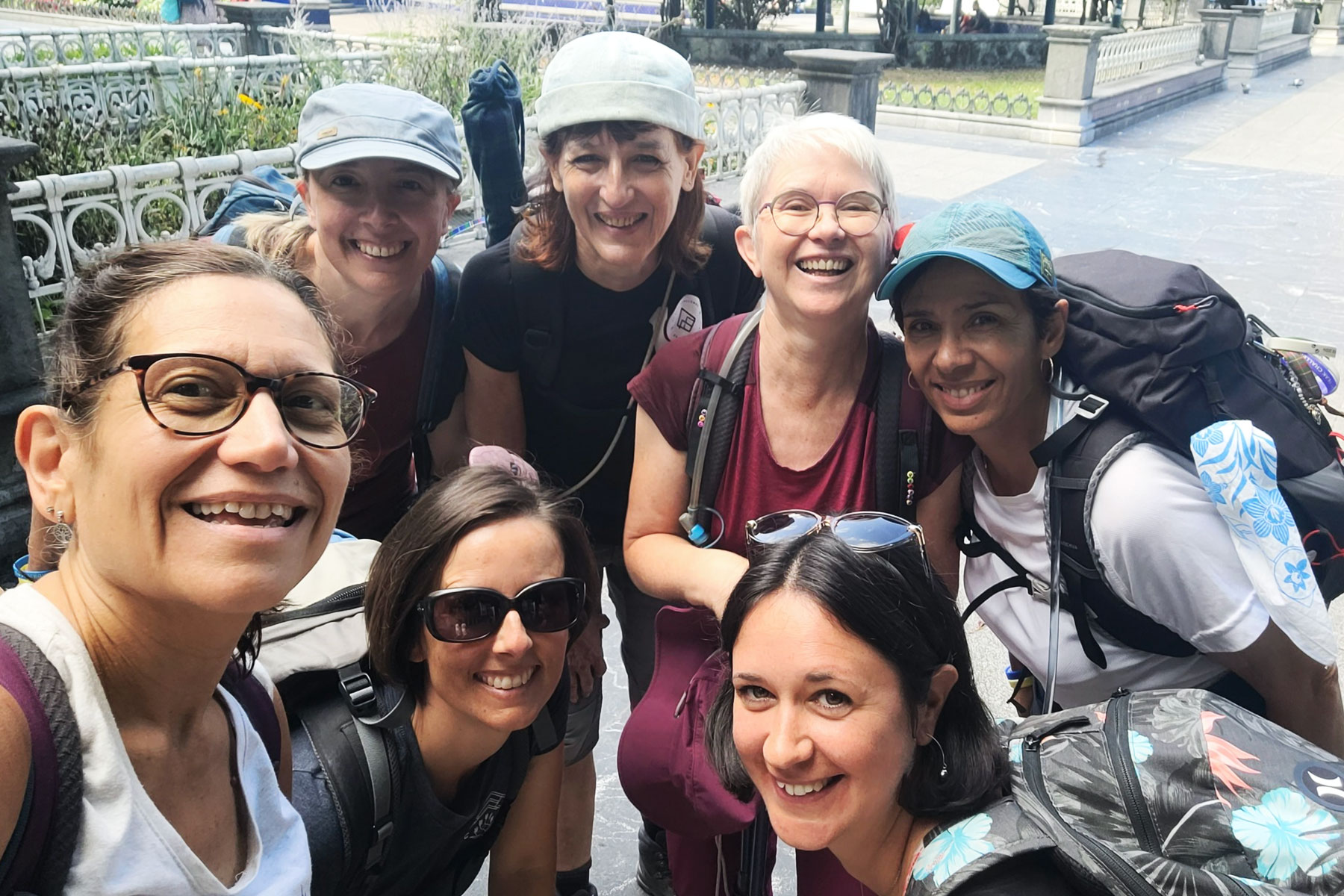
At MPC, you’re never starting from scratch. You already have a global crew of women who get it—who cheer when you crush your workout, who listen when life feels heavy, and who know that showing up for each other is just as important as showing up to train. Every post, every comment, every share in the group strengthens this web of support.
So this week, send that check-in, share your win, or join an Ambassador group. Those little sparks of connection are the difference between going it alone and being carried by a community. Here, you’re not just building strength, you’re building friendships that last.
Try your 7-Day Connection Plan this week in the MPC group and notice how much lighter the journey feels when you reach out to someone who needs it just as much as you do.
Resources
- Middle-aged Americans lonelier than European counterparts [Internet]. Apa.org. 2024. Available from: https://www.apa.org/news/press/releases/2024/03/middle-aged-americans-lonelier
- https://www.hhs.gov/sites/default/files/surgeon-general-social-connection-advisory.pdf
- CDC. Health Effects of Social Isolation and Loneliness [Internet]. Social Connection. CDC; 2024. Available from: https://www.cdc.gov/social-connectedness/risk-factors/index.html
- Gunnar MR. Social Buffering of Stress in Development: A Career Perspective. Perspectives on Psychological Science. 2017 May;12(3):355–73.
- Taylor-Swanson L, Wong AE, Pincus D, Butner JE, Hahn-Holbrook J, Koithan M, et al. The dynamics of stress and fatigue across menopause: attractors, coupling, and resilience. Menopause (New York, NY) [Internet]. 2018 Apr 1;25(4):380–90. Available from: https://pubmed.ncbi.nlm.nih.gov/29189603/
Get Connected!
Are you looking for a community that provides connection, friendship, and support? Peakers offer you the inspiration you need to keep you motivated on your health and wellness journey.